
Alabama Abortion Ban 2027: Exceptions, Penalties, and Travel

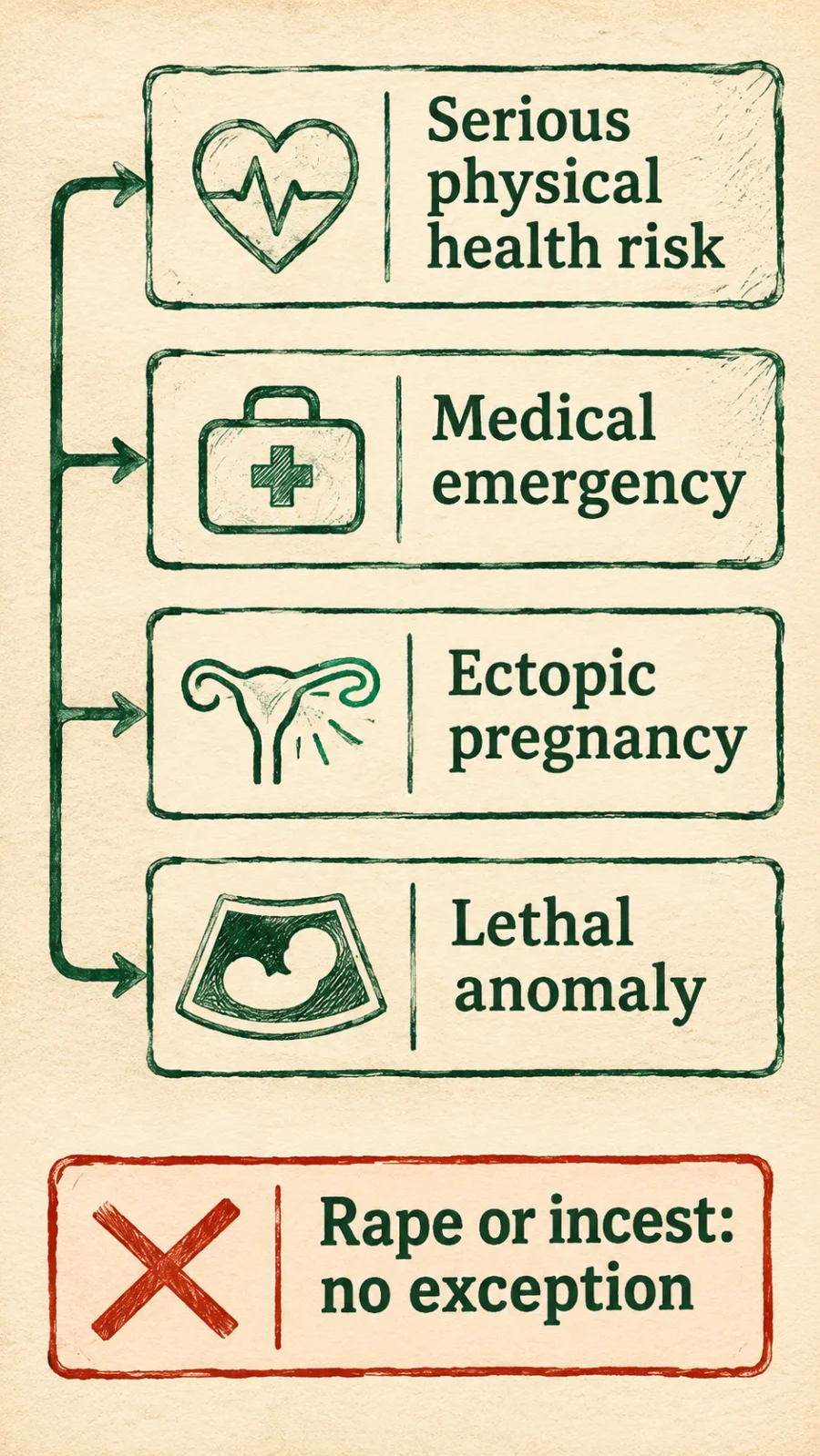
Alabama bans abortion at every stage of pregnancy under the Human Life Protection Act. The only exceptions are a serious physical health risk to the mother, an ectopic pregnancy, and a lethal fetal anomaly, and there is no exception for rape or incest. A person who performs a banned abortion commits a Class A felony punishable by 10 to 99 years or life, while the woman herself cannot be prosecuted under the Act.
Leaving the state for care is legal. A federal court has also barred the Alabama attorney general from prosecuting people and groups who help patients travel out of state.
How the Human Life Protection Act Works
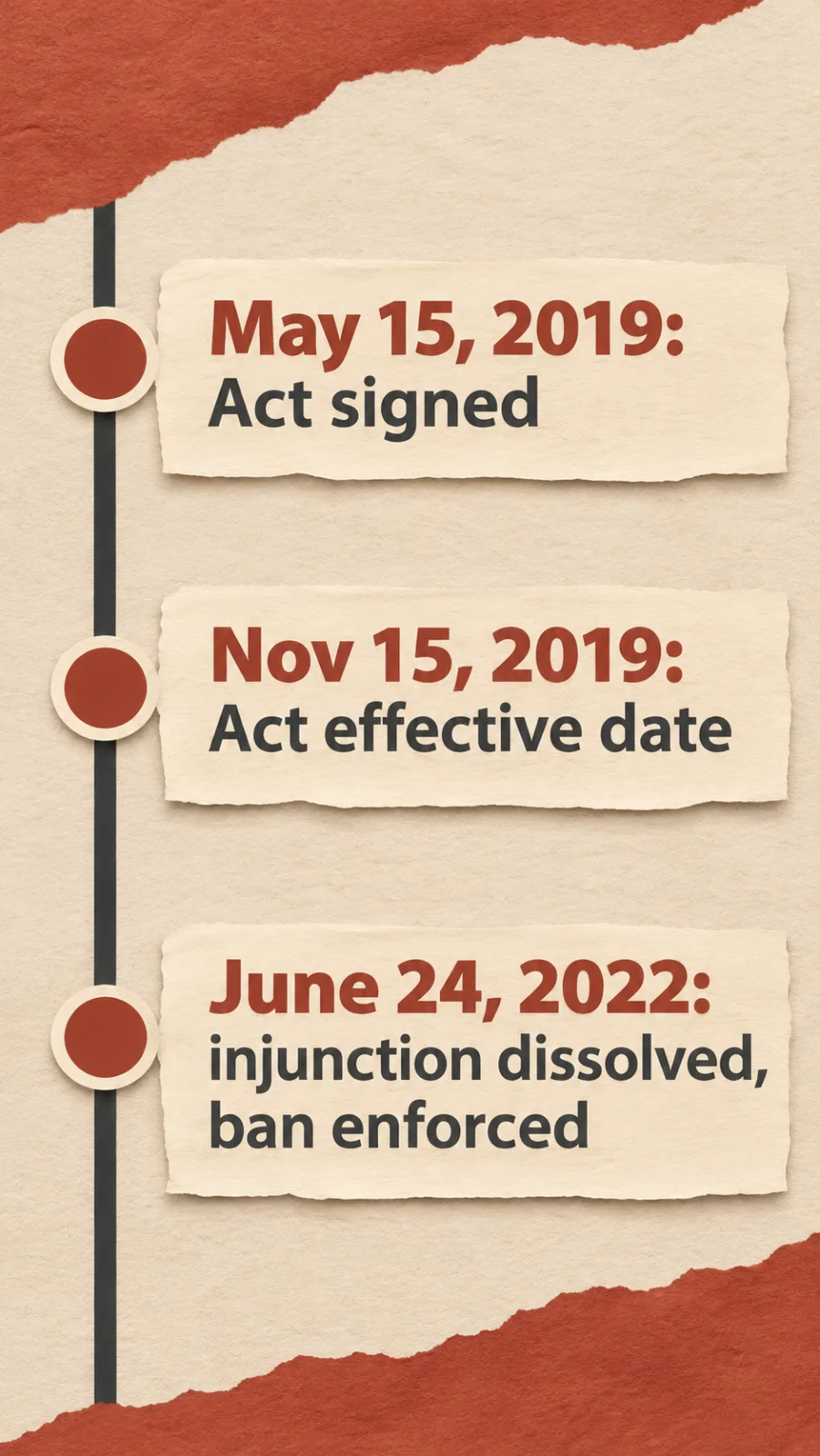
The Act, signed by Gov. Kay Ivey on May 15, 2019 as House Bill 314 (Act 2019-189), is codified at Ala. Code §§ 26-23H-1 through 26-23H-8. Its core rule is in § 26-23H-4(a): it is unlawful for “any person” to intentionally perform or attempt an abortion outside the exceptions. The wording reaches beyond physicians to anyone who performs the procedure.
A federal injunction kept the law from being enforced until the U.S. Supreme Court overturned Roe v. Wade. The district court dissolved that injunction on June 24, 2022, and the ban took effect that day.
The Act defines abortion in § 26-23H-3(1) as using or prescribing any instrument, medicine, drug or other substance with the intent to end the pregnancy of a woman known to be pregnant, knowing it will likely cause the unborn child’s death. That wording covers surgical procedures and abortion pills alike.
Exceptions Under Alabama’s Abortion Ban
The law allows abortion in four situations, three of which are built into the definitions rather than listed as exceptions. Rape and incest are not among them.
| Situation | What the law requires | Section |
|---|---|---|
| Serious health risk to the mother | An attending Alabama physician determines the abortion is needed to avert death or serious risk of substantial physical impairment of a major bodily function. A second Alabama physician confirms in writing. | § 26-23H-4(b); § 26-23H-3(6) |
| Medical emergency | The Act does not apply to a physician ending a pregnancy because, in reasonable medical judgment, it must end to avoid a serious health risk. | § 26-23H-7; § 26-23H-3(4) |
| Ectopic pregnancy | Not an “abortion” under the definition. Includes an egg implanted in the cornu of the uterus. | § 26-23H-3(1), (2) |
| Lethal anomaly | Not an “abortion.” A lethal anomaly is a condition from which the child would die after birth or shortly after, or be stillborn. | § 26-23H-3(1), (3) |
When the second physician has to sign
The second doctor’s written confirmation does not have to come first. Outside a medical emergency, it must be made within 180 days after the abortion is completed, and it counts as prima facie evidence that the abortion was permitted. Competing summaries often describe it as a pre-procedure approval, which the text does not say.
Mental health
Emotional or mental illness generally does not count as a serious health risk. The statute carves out one narrow path: an Alabama-licensed psychiatrist with at least three years of clinical experience must examine the woman and document a diagnosed serious mental illness, and there must be reasonable medical judgment that she will act in a way that could cause her death or the child’s death. Even then, the procedure must be done by a physician in a hospital where he or she has admitting privileges.
Rape and incest
The code text has no rape or incest exception. Bills to add one, such as House Bill 31 in the 2024 session, have not changed § 26-23H-4.
Penalties: Who Can Be Charged
The penalties fall on the person who performs or attempts the abortion. Under Ala. Code § 13A-5-6, the sentencing ranges are:
| Offense | Felony class | Prison term |
|---|---|---|
| Performing a banned abortion (§ 26-23H-6(a)) | Class A | 10 to 99 years, or life |
| Attempting one (§ 26-23H-6(b)) | Class C | 1 year and 1 day to 10 years |
Under § 26-23H-5, no woman on whom an abortion is performed or attempted is criminally or civilly liable. The same section protects a physician who confirms the serious health risk.
Other Alabama laws that could be used
The Act’s protection for women does not stop prosecutors from invoking other statutes. In January 2023, Attorney General Steve Marshall said women who take abortion pills could face charges under the chemical endangerment of a child law, Ala. Code § 26-15-3.2. The Alabama Supreme Court held in Ex parte Ankrom, 152 So. 3d 397 (Ala. 2013), that “child” in that statute includes an unborn child. That law was written for drug exposure, and whether it can be applied to abortion pills is unsettled.
Abortion Pills and the Louisiana v. FDA Case
Medication abortion is illegal inside Alabama, but pills sent by mail from providers in other states have been a route for some residents. On June 9, 2026, the Attorney General’s office sent cease-and-desist letters to six mail-order providers, saying shipping abortion drugs to Alabama violates state law and threatening civil penalties of up to $2,000 per violation under consumer protection statutes.
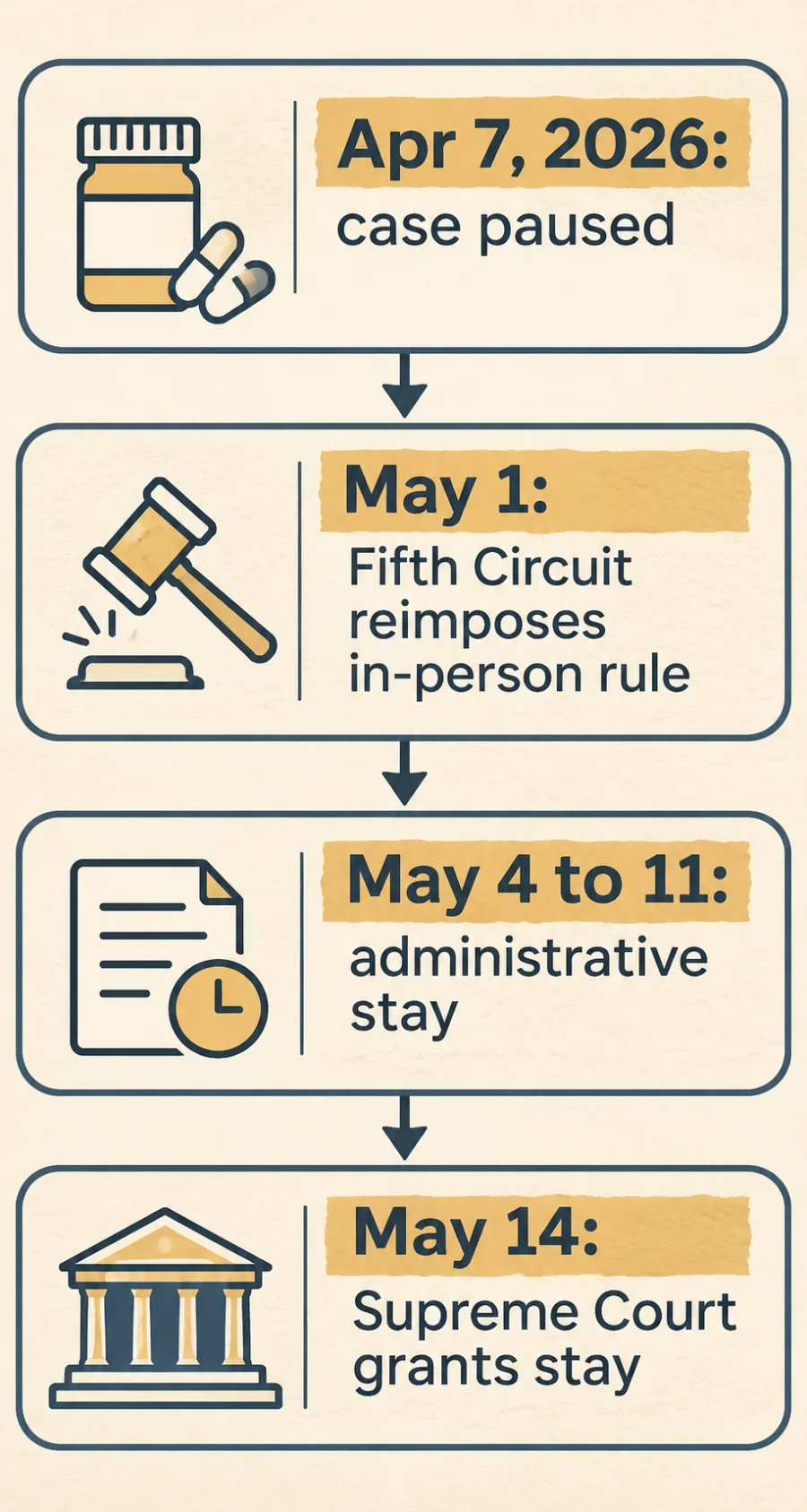
Federal access to mifepristone by telehealth and mail depends on a separate case, Louisiana v. FDA, filed in October 2025. Louisiana challenges the FDA’s 2023 decision to drop the in-person dispensing requirement. The sequence in 2026:
- April 7: a federal district court in Louisiana declined to stay the 2023 rule but paused the case while the FDA reviews mifepristone.
- May 1: the Fifth Circuit stayed the 2023 changes in No. 26-30203, reimposing in-person dispensing nationwide.
- May 4 and May 11: Justice Alito entered and then extended an administrative stay.
- May 14: the Supreme Court granted a stay in Danco Laboratories v. Louisiana, No. 25A1207, with Justices Thomas and Alito dissenting.
The stay leaves the FDA’s current rules in place while the Fifth Circuit appeal and any petition to the Supreme Court play out. A ruling for Louisiana on the merits would again restrict mailed and pharmacy-dispensed mifepristone.
Traveling Out of State for an Abortion
Alabama’s ban applies to abortions performed in Alabama. Nothing in the Act makes it a crime to leave the state, and a federal court has said prosecuting people who help would be unconstitutional.
On March 31, 2025, Judge Myron Thompson of the Middle District of Alabama issued a 131-page opinion in Yellowhammer Fund v. Marshall, No. 2:23-cv-450. He declared that using Alabama’s criminal code against people who assist someone leaving the state for abortion care where it is legal would violate the First Amendment and the right to travel. The ruling covers abortion funds, clinics and individuals who give money, rides or information. No appeal was filed, so the judgment is final.
The ruling has limits. It binds the Attorney General over travel assistance, not over shipping pills into Alabama, which the cease-and-desist letters target. Guttmacher’s Monthly Abortion Provision Study estimated that about 4,680 Alabama residents obtained abortions in other states in 2024.

Emergency Care for Pregnant Patients
Alabama’s Act does not apply to a physician ending a pregnancy because of a medical emergency, as defined in § 26-23H-3(4) and § 26-23H-7. Federal law also requires hospitals that accept Medicare to stabilize anyone with an emergency medical condition.
The federal side changed on June 3, 2025, when CMS rescinded its July 2022 guidance saying abortion could be required stabilizing care regardless of state law. In its statement, CMS said it would keep enforcing the federal emergency care law, including for conditions that place the health of a pregnant woman or her unborn child in serious jeopardy. The guidance’s removal means the original article’s claim that federal officials had confirmed abortion as required emergency care no longer reflects federal policy. If you are in an emergency, go to the nearest hospital.
IVF and Frozen Embryos
IVF is not abortion under the Act, because the definition requires ending the pregnancy of a woman known to be pregnant. A separate ruling created the uncertainty. On February 16, 2024, the Alabama Supreme Court held in LePage v. Center for Reproductive Medicine that frozen embryos are “extrauterine children” under the state’s Wrongful Death of a Minor Act, and several clinics paused IVF.
The Legislature passed Senate Bill 159, which Ivey signed on March 6, 2024. It gives civil and criminal immunity to people providing or receiving IVF goods and services for the death or damage of an embryo. Clinics reopened, but the law shields providers and patients without overruling the court’s reading of the wrongful death statute.
Where to Get Legal Help or Care
- Emergency: go to the nearest emergency room.
- Legal questions: the Repro Legal Helpline (844-868-2812, reprolegalhelpline.org) gives free confidential legal information.
- Travel funding and logistics: the Yellowhammer Fund, a Tuscaloosa nonprofit, resumed funding travel after the March 31, 2025 ruling.
- Finding a clinic in another state: AbortionFinder.org lists providers by location.
- If you provide or assist with care: talk to a licensed Alabama attorney before acting, since the Act reaches “any person” and the travel ruling does not cover pills shipped into the state.
Frequently Asked Questions
Is abortion completely illegal in Alabama?
Almost. It is banned at every stage under Ala. Code § 26-23H-4, with exceptions for a serious physical health risk to the mother, ectopic pregnancy and lethal anomaly. There is no exception for rape or incest.
Can a woman be arrested for having an abortion in Alabama?
Not under the Human Life Protection Act. Section 26-23H-5 says no woman on whom an abortion is performed or attempted is criminally or civilly liable. The Attorney General has said other laws, such as chemical endangerment, could apply to pill use.
What happens to a doctor who performs a banned abortion?
A Class A felony, which carries 10 to 99 years or life in prison. An attempted abortion is a Class C felony, with 1 year and 1 day to 10 years.
Can I travel to another state for an abortion?
Yes. The Act only governs abortions in Alabama, and a federal court ruled on March 31, 2025 that prosecuting people who help with out-of-state travel would violate the First Amendment and the right to travel.
Is the abortion pill legal in Alabama?
No. The Act’s definition of abortion includes prescribing or using drugs to end a pregnancy. The Supreme Court’s May 14, 2026 stay keeps federal mail and telehealth access to mifepristone in place nationally while Louisiana v. FDA continues, but that does not change Alabama law.
Does Alabama allow an abortion for a fetal anomaly?
Only for a lethal anomaly, meaning the child would die after birth or shortly after, or be stillborn. Such a procedure is excluded from the definition of abortion.
References
- Alabama Code, Title 26, Chapter 23H, The Alabama Human Life Protection Act, §§ 26-23H-1 to 26-23H-8
- Alabama Code § 13A-5-6, Sentences of Imprisonment for Felonies
- U.S. District Court, M.D. Ala., Yellowhammer Fund v. Marshall, No. 2:23-cv-450, Opinion (March 31, 2025)
- U.S. Supreme Court, Danco Laboratories, LLC v. Louisiana, No. 25A1207, docket
- U.S. Court of Appeals for the Fifth Circuit, Louisiana v. FDA, No. 26-30203 (May 1, 2026)
- Alabama Attorney General’s Office, cease-and-desist letters to mail-order abortion providers (June 9, 2026)
- Centers for Medicare & Medicaid Services, Statement on the Emergency Medical Treatment and Labor Act (June 3, 2025)
- Alabama Supreme Court, Ex parte Ankrom, 152 So. 3d 397 (2013), chemical endangerment and unborn children