
New Mexico Abortion Laws: Your Rights and Where to Get Care

Abortion is legal in New Mexico at every stage of pregnancy. The state has no gestational limit, no waiting period, and no parental consent or notification statute, and state law bars cities and counties from adding their own restrictions. You can reach care through the NMHealth Helpline at 1-833-796-8773, which is staffed by nurses and open to callers from any state.
This guide covers what the statutes say, what the New Mexico Supreme Court decided about local abortion bans, how the interstate shield law works, what happens with abortion pills and telehealth, and how to pay for and find care.
What New Mexico Law Allows and Does Not Require
New Mexico repealed its old criminal abortion statute, N.M. Stat. §§ 30-5-1 through 30-5-3, in 2021 through Senate Bill 10. That repeal also removed the pre-Roe parental consent language and the rule limiting surgical abortion to licensed physicians. No replacement ban or time limit was enacted.
The table below shows how the main rules that other states use to restrict abortion compare with New Mexico’s approach.
| Rule | New Mexico | Where it comes from |
|---|---|---|
| Gestational limit | None | 2021 repeal of §§ 30-5-1 to -3 |
| Waiting period | None | No statute imposes one |
| Parental consent or notice | None in statute | Repealed in 2021 |
| Local bans or licensing barriers | Prohibited | § 24-34-3 (2023 Freedom Act) |
| Provider reporting to the state | None | § 24-14-18 repealed in 2026 |
| State Medicaid coverage | Medically necessary abortion, state funds | 1998 state Supreme Court ruling |
Minors and Consent
No New Mexico statute requires a minor to get a parent’s permission or to notify a parent. The state Department of Health tells patients on its abortion and reproductive health page that people over 13 can get an abortion without a parent’s permission.
Clinics set their own intake policies for very young patients, so a patient under 13 should call the clinic or the helpline before booking.
No Gestational Limit in Practice
The lack of a cutoff in state law does not mean every clinic offers every procedure at every stage. Most abortions happen early in pregnancy, and providers decide what they can safely offer based on their own training and facilities. If you are past the first trimester, the helpline can tell you which clinics take later appointments and what the wait is.
Medicaid and Other Ways to Pay
New Mexico Medicaid, which the state calls Turquoise Care, pays for medically necessary abortions with state money rather than federal funds. That rule comes from New Mexico Right to Choose/NARAL v. Johnson, 1999-NMSC-005, where the state Supreme Court held that excluding abortion from Medicaid coverage violated the state constitution’s equal rights provision.
Federal Medicaid money can pay for abortion only in cases of rape, incest or life endangerment under the Hyde Amendment, which is why the state-funded route matters. Coverage depends on Medicaid eligibility, and people without a qualifying immigration status or Medicaid enrollment often rely on abortion funds and clinic payment programs. The NMHealth page lists trusted resources for cost, travel and lodging.
The 2023 Freedom Act and the Fight Over Local Bans
The Reproductive and Gender-Affirming Health Care Freedom Act, House Bill 7, was signed on March 16, 2023 and is codified at N.M. Stat. § 24-34-1 and following. It bars a public body from discriminating against someone for using or refusing reproductive care, from restricting a person’s access to care within the medical standard of care, and from keeping any law or ordinance that conflicts with the Act.
Enforcement runs two ways. The attorney general can sue, and a person harmed by a violation can bring a private suit. A court may assess a civil penalty of $5,000 or actual damages per violation, whichever is greater. Claims can be brought against public bodies, not against individual officials.
What the New Mexico Supreme Court Decided
After Roe was overturned in 2022, the cities of Hobbs and Clovis and Lea and Roosevelt counties passed ordinances that tried to block abortion clinics, using a business-licensing approach tied to the federal Comstock Act. Eunice and Edgewood adopted similar ordinances but were not defendants in the case.
On January 9, 2025, the court ruled unanimously in State ex rel. Torrez v. Board of County Commissioners for Lea County, No. S-1-SC-39742, that the ordinances were preempted by state law. The decision relied on state law only. The court did not decide how the federal Comstock Act applies, and lawyers for the cities have said they expect that question to be pressed in federal court. The New Mexico Department of Justice announcement summarizes the ruling.

The Shield Law: Protection for Out-of-State Patients and Providers
New Mexico’s Reproductive and Gender-Affirming Health Care Protection Act, Senate Bill 13, is the state’s shield law, codified at N.M. Stat. §§ 24-35-1 through 24-35-8 (Laws 2023, ch. 167). It protects people who seek, provide, receive or help with reproductive care from civil or criminal liability and professional discipline that originates in another state.
It also limits what state agencies can release about a protected health care activity, and it lets someone hit with abusive out-of-state litigation sue in New Mexico district court. The attorney general and district attorneys can enforce it.
Separately, Governor Michelle Lujan Grisham signed an executive order in June 2022 directing state agencies not to cooperate with out-of-state investigations or extradition requests tied to abortion lawfully provided in New Mexico.
Where the Shield Has Limits
A shield law controls what New Mexico courts and officials will do. It cannot stop another state from passing its own law or filing its own case, and how far those cases can reach a provider or patient across state lines is unsettled. A patient who travels to New Mexico is on solid footing inside the state. Someone who plans to prescribe or help from New Mexico into a ban state should talk to a lawyer first.
Abortion Pills, Telehealth and the Louisiana Case
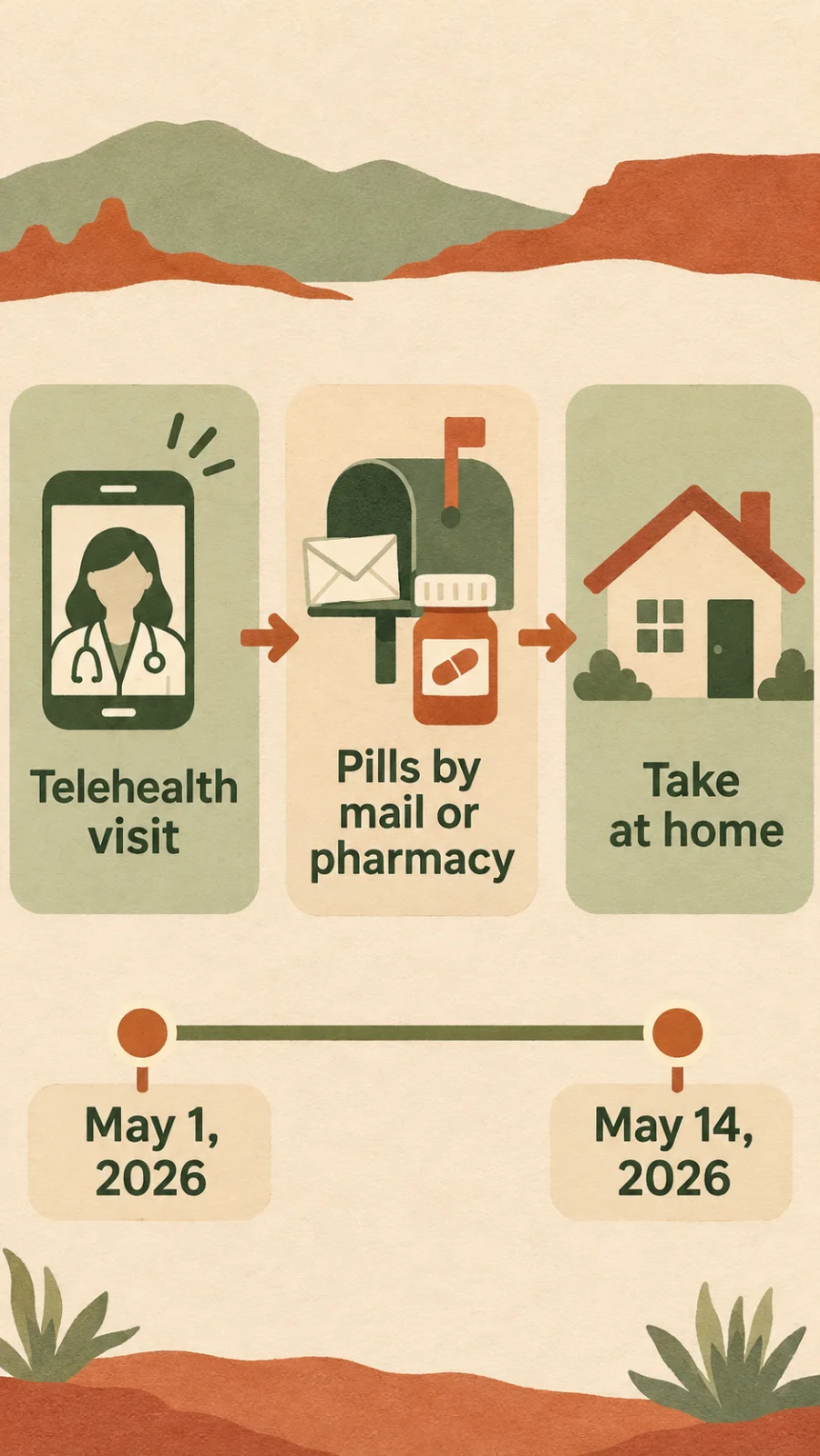
Medication abortion uses mifepristone followed by misoprostol. Telehealth prescribing and mail delivery of mifepristone are available under the FDA’s 2023 safety rules, and a New Mexico provider can see patients by video within the state’s rules.
That access was briefly put at risk in Louisiana v. FDA. On May 1, 2026, a three-judge panel of the Fifth Circuit stayed the 2023 changes and reinstated an in-person dispensing requirement nationwide. On May 14, 2026, the U.S. Supreme Court stayed that order. NPR reported that the pills stay available by telehealth and mail while the case moves through the lower courts, and the Supreme Court’s order leaves the status quo in place until the Fifth Circuit rules on Louisiana’s appeal and any petition for review is resolved.
The Fifth Circuit heard argument in the appeal in September 2026. A ruling from that court would not change access until the Supreme Court acts on the stay.
New Mexico law also does not make it a crime for a pregnant person to end their own pregnancy.
Who Can Provide Care
Since the 2021 repeal removed the physician-only language for surgical abortion, no New Mexico statute restricts abortion to physicians. Licensed clinicians within their scope of practice can provide care, which is part of why appointment availability is better than in states that limit who can prescribe.
Reporting Requirements Were Repealed in 2026
Senate Bill 30, repealing N.M. Stat. § 24-14-18, removed the requirement that each induced abortion be reported to the state registrar within five days. The reports were anonymous and statistical. The Senate passed the bill 24-15 on a party-line vote, and the repeal took effect on May 20, 2026.
Supporters argued the 49-year-old law was out of date and that the state had not enforced it since 2019. Opponents, including the group Abortion Free New Mexico, argued the repeal removes the state’s only statutory source of abortion data. You can read the bill on the New Mexico Legislature’s site.
How to Get Abortion Care in New Mexico
Start with the NMHealth Helpline at 1-833-SWNURSE (1-833-796-8773). Nurses can tell you which clinics have openings and how long the wait is, and they can point you to help with cost, travel and lodging. Hours are weekdays 7 a.m. to 8 p.m. and weekends 10 a.m. to 4 p.m. Mountain time, including holidays. You can also text NMDOH to 66364.
The department states that it does not share your information with anyone, and multiple languages are available, including Spanish. The All-Options Talkline at 1-888-493-0092 offers non-directive support if you are weighing pregnancy, parenting, adoption or abortion.
What to Do Before You Travel
- Call the helpline or a clinic and ask about appointment times, how far along they can see you, and what the visit costs.
- Ask whether your insurance or Medicaid applies, and whether an abortion fund can cover the gap.
- Plan travel and lodging early, since appointment slots in Albuquerque and Las Cruces fill quickly.
- Ask the clinic what to expect for follow-up, and how to reach the clinic or helpline after you return home.

Frequently Asked Questions
Is there a gestational limit for abortion in New Mexico?
No. State law sets no gestational limit, so abortion is legal at any stage of pregnancy. Individual clinics decide how late they provide care.
Does a minor need a parent’s permission for an abortion in New Mexico?
No New Mexico statute requires parental consent or notice. The Department of Health says people over 13 can get an abortion without a parent’s permission.
Does New Mexico have a waiting period?
No. State law does not require a delay between your first appointment and the procedure.
Can I get abortion pills by mail in New Mexico?
Yes. Telehealth prescribing and mail delivery of mifepristone are available while the Louisiana case proceeds, because the U.S. Supreme Court stayed the Fifth Circuit’s May 2026 order.
Will New Mexico protect me if I come from a state with an abortion ban?
Within New Mexico, yes. The shield law at N.M. Stat. §§ 24-35-1 to -8 protects patients, providers and helpers from out-of-state liability in New Mexico courts, though it cannot stop another state from pursuing its own case.
Does Medicaid cover abortion in New Mexico?
Yes. Turquoise Care covers medically necessary abortion with state funds for eligible enrollees, under a 1998 state Supreme Court ruling.
References
- New Mexico Legislature, House Bill 7 (2023), Reproductive and Gender-Affirming Health Care Freedom Act, N.M. Stat. § 24-34-1 et seq.
- New Mexico Legislature, Senate Bill 13 (2023), Reproductive and Gender-Affirming Health Care Protection Act, N.M. Stat. § 24-35-1 et seq.
- New Mexico Legislature, Senate Bill 30 (2026), repeal of N.M. Stat. § 24-14-18 abortion reporting
- New Mexico Department of Health, Abortion and Reproductive Health, NMHealth Helpline
- New Mexico Department of Justice, announcement of State ex rel. Torrez v. Board of County Commissioners for Lea County, No. S-1-SC-39742 (Jan. 9, 2025)
- NPR, report on the U.S. Supreme Court stay in Louisiana v. FDA (May 14, 2026), news coverage