
Oregon Abortion Laws Simply Explained: Your Rights and Access

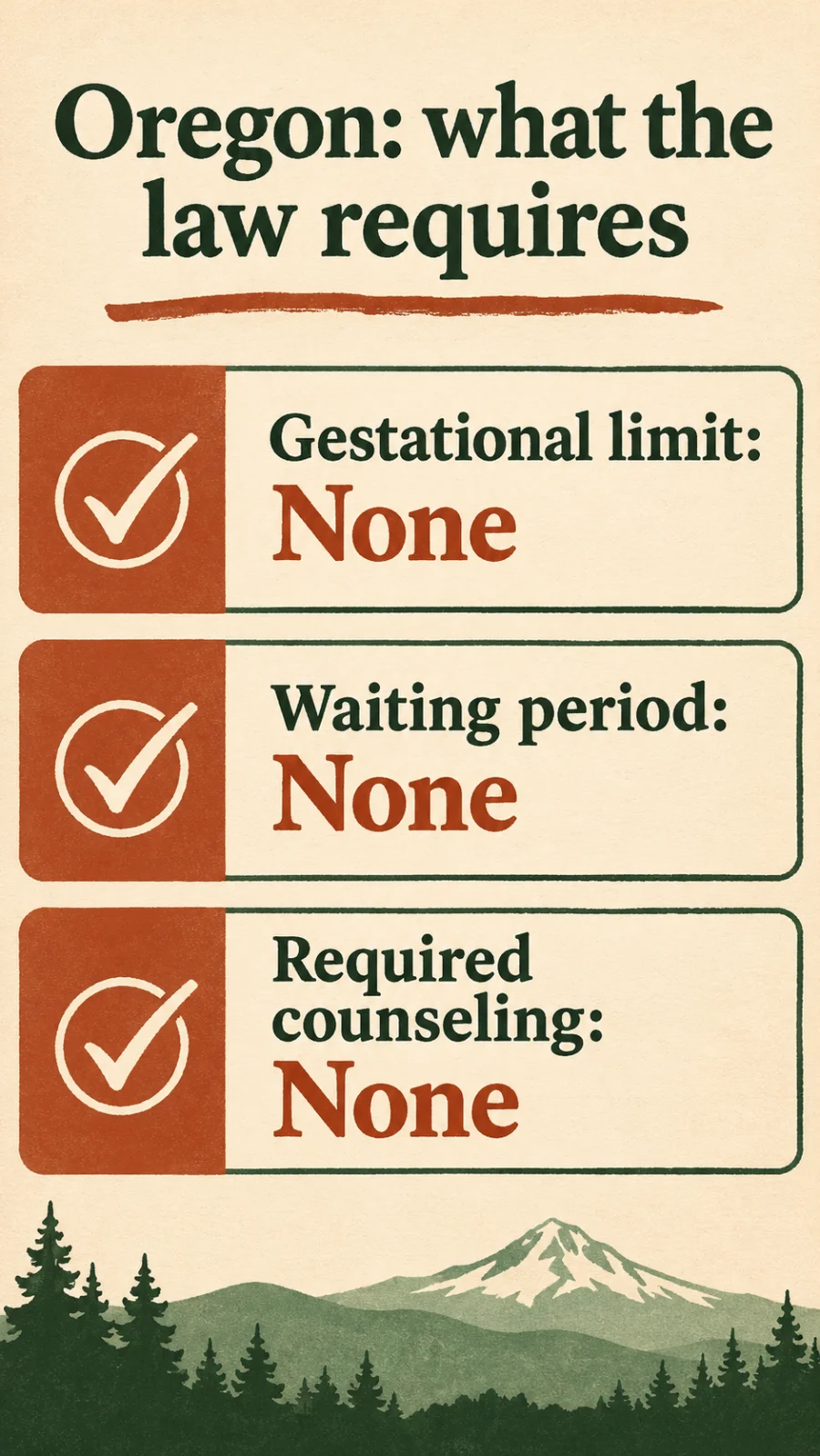
Abortion is legal in Oregon at every stage of pregnancy. State law sets no gestational limit, no waiting period and no required counseling, and ORS 435.210 calls the decision a fundamental right.
You do not have to live in Oregon to get care here, and anyone 15 or older can consent without a parent. The details below cover what the statutes say, what changed in 2026, and where the rules have limits.
What Does Oregon Law Say About Abortion?
Oregon protects abortion in statute, not only in court decisions. ORS 435.210 says every individual has a fundamental right to make decisions about reproductive health, including the right to terminate a pregnancy. The Legislature added that language in 2023 through House Bill 2002.
The companion section, ORS 435.240, bars a public body from depriving a consenting person of that choice or from penalizing anyone for exercising it. Subsection (1)(f) extends the protection to people who provide aid, assistance or support, as long as their actions do not otherwise break Oregon law.
Under ORS 435.245, any person can sue a public body for an injunction to enforce these rights, and a winning plaintiff can recover attorney fees. That enforcement route is unusual. Most states with abortion protections rely on court rulings that a later court can reverse.
Is There a Gestational Limit in Oregon?
No. No Oregon statute cuts off abortion at a set number of weeks, and your provider decides what care is appropriate for your pregnancy. The only gestation-related rule is administrative: ORS 435.496 requires each induced termination to be reported to the Center for Health Statistics within 30 days “regardless of the length of gestation,” and the report may not include the patient’s name.
Oregon’s Rules Compared With Common Restrictions
| Rule found in many states | Oregon | Source |
|---|---|---|
| Week-based ban or limit | None | ORS 435.210, 435.496 |
| Waiting period | None | No provision in ORS ch. 435 |
| Mandatory counseling | None | No provision in ORS ch. 435 |
| Parental consent | None at 15 or older; limited exceptions under 15 | ORS 109.640 |
| Patient cost-sharing | Barred in most insured plans | ORS 743A.067 |
| Public hospitals may refuse | No | ORS 435.475(3) |
How the Law Got Here
The Reproductive Health Equity Act, House Bill 3391, was signed on August 15, 2017. It put no-cost coverage of abortion and other reproductive care into state insurance law, and the coverage rule now sits in ORS 743A.067.
House Bill 2002 followed in 2023. It created the fundamental-right language in ORS 435.210, moved the old ORS 659.880 protections into ORS 435.240, and added protections for providers who treat patients from other states.
A third layer arrived in 2026 with House Bill 4088 and House Bill 4127, both covered below.
Can Teens Get an Abortion Without a Parent?
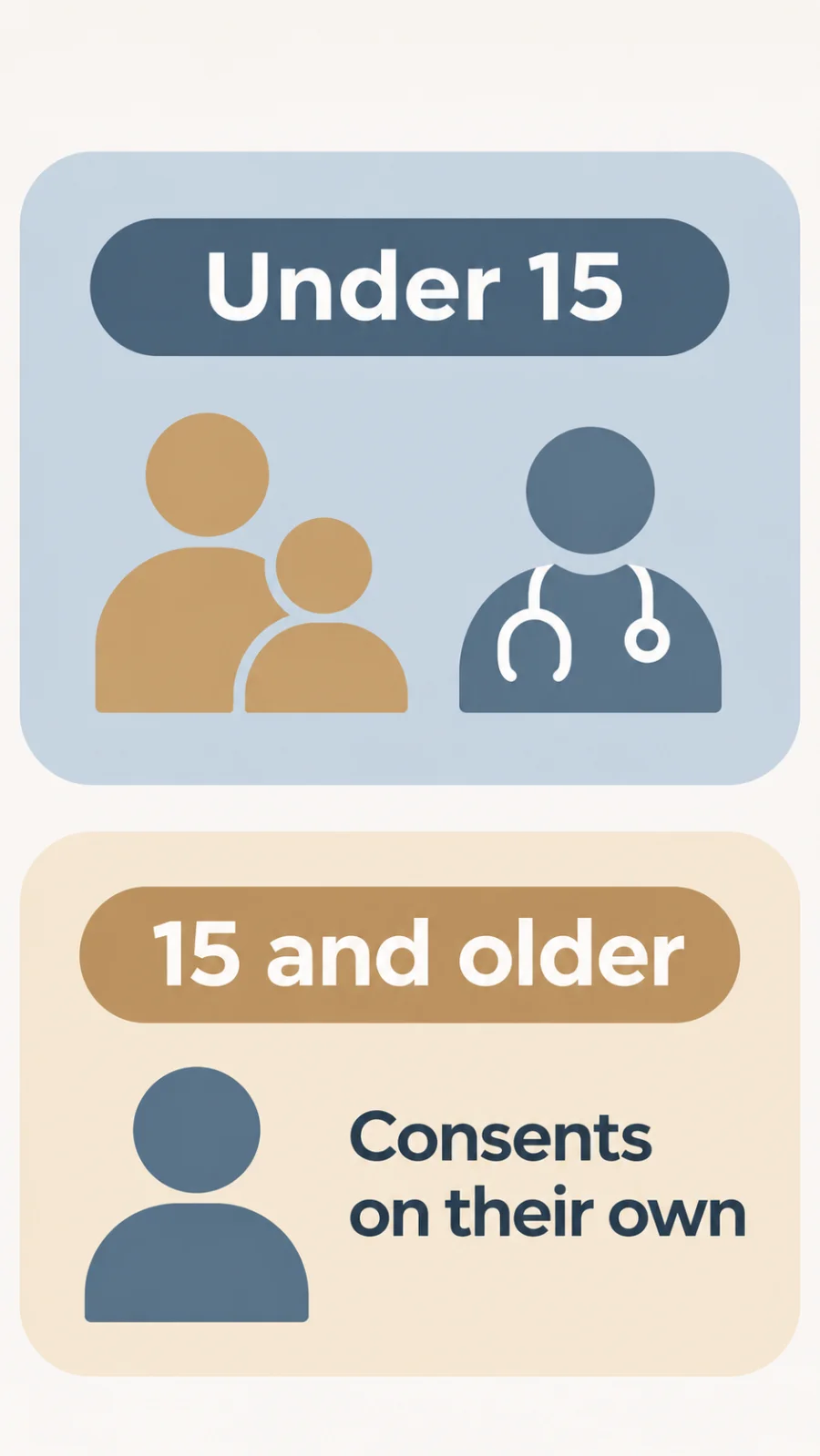
If you are 15 or older, yes. ORS 109.640 lets a minor 15 or older consent to medical care on their own, and Oregon has no judicial bypass because no court permission is involved.
Under 15, the statute is narrower. A minor can consent to an abortion without a parent only when the provider acts within their scope of practice and reasonably believes one of two things. Either involving a parent may result in physical or emotional abuse or neglect, or requiring parental consent is not in the minor’s best interest, which the provider must document after getting the agreement of a provider at a separate practice or facility.
Minors of any age can consent to other reproductive health care, such as contraception, from a physician, physician assistant, nurse practitioner, pharmacist or naturopathic physician. The one exception is abortion for a minor under 15.
Confidentiality has one limit. If a provider has reasonable cause to believe a minor has been abused, ORS 109.640(5) requires them to follow the mandatory child abuse reporting duties in ORS 419B.010.
Does Insurance Have to Cover Abortion in Oregon?
Mostly yes. Under the Reproductive Health Equity Act, ORS 743A.067 requires state-regulated health plans to cover abortion without a deductible, coinsurance, copayment or other cost-sharing. The Oregon Health Plan, the state’s Medicaid program, also covers abortion under OAR 410-130-0562.
The coverage rule has a religious-employer exception. An insurer may offer a religious employer a plan without abortion and contraceptive coverage that conflicts with its religious tenets, if enrollees are told in writing.
The Oregon Right to Life Ruling
That exception is the subject of a 2026 federal case. Oregon Right to Life, a Keizer anti-abortion nonprofit, did not qualify as a religious employer under the statute and sued. The Ninth Circuit revived its case on October 31, 2025 in Oregon Right to Life v. Stolfi, No. 24-6650.
On remand, U.S. District Judge Mustafa Kasubhai ruled from the bench on April 14, 2026 and issued a written opinion on July 1, 2026. He held the religious-employer exemption unconstitutional as applied to Oregon Right to Life. OPB reported that the ruling does not change coverage requirements for any other employer, and the Oregon Department of Justice said the court did not find the law unconstitutional on its face.
If your plan is a standard insured plan, your zero-cost coverage is unchanged.
Abortion Pills by Mail in Oregon
Medication abortion by telehealth and mail is available in Oregon. It accounted for nearly 63% of Oregon abortions in 2024, according to the Oregon Health Authority. The regimen pairs mifepristone with misoprostol, and the FDA label covers it through 10 weeks of pregnancy.
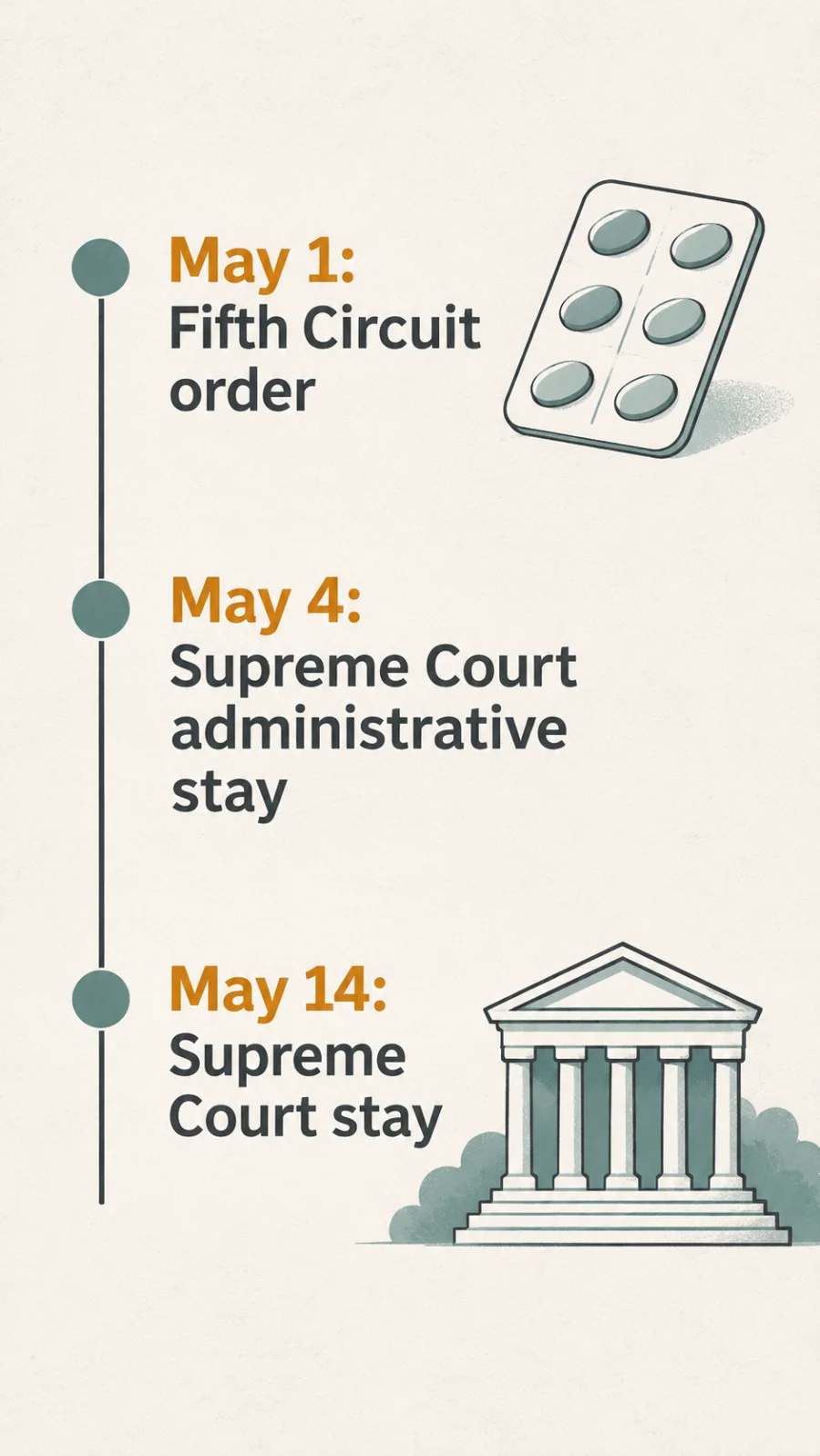
Federal litigation put that access at risk in 2026. On May 1, a Fifth Circuit panel in Louisiana v. FDA stayed the FDA’s 2023 rules and reinstated in-person dispensing nationwide. Justice Alito issued administrative stays on May 4 and May 11. On May 14, the full Supreme Court stayed the Fifth Circuit’s order.
That stay lasts through the Fifth Circuit’s decision on the appeal and any petition for Supreme Court review, and it ends automatically if the Court denies review. The Fifth Circuit has heard oral argument. Until it rules, the FDA’s 2023 telehealth and mail rules stay in effect, and OHA has said mifepristone and abortion remain legal and available in Oregon.
Oregon’s Shield Law and House Bill 4088
Oregon’s shield law protects people who provide or help with legal reproductive care in Oregon from out-of-state legal action. The 2023 version protected providers from civil suits, professional discipline and subpoenas. House Bill 4088 expanded it in 2026.
The bill passed the Senate on March 5, 2026, and Governor Tina Kotek signed it on March 31. According to the legislature’s staff measure summary and the bill’s history, Oregon law controls civil claims about this care, Oregon does not enforce other states’ penalties, and the governor does not surrender people for this care unless federal or Oregon law requires it.
HB 4088 also covers anyone who aids or assists a patient, adds privacy protections for patients and providers, and makes court petitions for a legal sex change confidential with some exceptions. Opponents, including Oregon Right to Life, testified against it. Kotek has said she had received no extradition requests related to this care when the bill passed.
Planned Parenthood Funding After the Federal Ban
A federal provision in H.R. 1, signed July 4, 2025, barred Medicaid payments to certain providers, including Planned Parenthood, for one year. It expired July 4, 2026, and Planned Parenthood can bill Medicaid again for non-abortion services.
Federal Medicaid money cannot pay for abortion under the Hyde Amendment, and about 10% of what Planned Parenthood provides in Oregon is related to abortion. Most visits are for services such as cancer screenings, STI testing and birth control. Planned Parenthood Columbia Willamette and Planned Parenthood Southern Oregon run 11 health centers in Oregon, plus one in Vancouver, Washington, according to KOIN.
Oregon responded in two steps. Lawmakers approved $7.5 million in emergency funding in 2025. In March 2026, Kotek signed House Bill 4127, which lets the Oregon Health Authority pay reproductive health providers with state funds when they cannot receive federal Medicaid reimbursement for services on or after July 4, 2025. Its staff summary says a grant program created by the bill ends January 2, 2028.
Can You Travel to Oregon for an Abortion?
Yes. Oregon has no residency requirement, and ORS 435.240(1)(f) protects people who help someone obtain care. Planned Parenthood’s Ontario clinic, near the Idaho border, serves mostly out-of-state patients, the Oregon Capital Chronicle has reported.
Idaho bans most abortions, so Ontario is a short drive from a state where care is restricted. Providers who treat out-of-state patients get the shield law’s protections, which makes it harder for another state’s prosecutor to reach them.

Privacy and Your Medical Records
Oregon providers file a report on each abortion with the Center for Health Statistics, but ORS 435.496 bars the report from disclosing the parents’ names or identities. Beyond that report, HB 4088 added limits on sharing patient and provider information with other states.
Two exceptions apply. Providers must still make mandatory child abuse reports, and health data can be released with your consent.
Steps to Take If You Need Care
- Decide between a clinic visit and telehealth. Both are legal, and the Oregon Health Authority’s “Where to Get an Abortion” page lists options.
- Ask the provider about cost before you book. Most insured plans cover abortion with no cost-sharing, and the Oregon Health Plan covers it too. The OHA “Paying for an Abortion” and “Abortion Support” pages cover help with costs and travel.
- If you are under 15, ask the provider how ORS 109.640 applies to you before the visit.
- If you are coming from another state, you do not need Oregon residency or a local referral to book.
Frequently Asked Questions
Is abortion legal in Oregon at any stage of pregnancy?
Yes. Oregon has no gestational limit, and the provider decides what care fits your pregnancy. Each procedure is reported to the state within 30 days without your name.
Do I need parental permission for an abortion in Oregon?
Not if you are 15 or older. Under 15, you can consent alone only if a provider reasonably believes a parent’s involvement could lead to abuse or neglect, or that requiring consent is not in your best interest and a second provider agrees.
Does my insurance have to cover abortion in Oregon?
Most state-regulated plans must cover it with no deductible, copay or coinsurance under ORS 743A.067. The Oregon Health Plan also covers it. A 2026 federal ruling exempts only Oregon Right to Life from the rule.
Can I get abortion pills by mail in Oregon?
Yes. A telehealth provider can prescribe mifepristone and misoprostol and mail them to you. The Supreme Court’s May 14, 2026 stay keeps the FDA’s telehealth rules in place while the Fifth Circuit appeal and any Supreme Court review continue.
Does Oregon have a waiting period for abortion?
No. No Oregon statute requires a waiting period, special counseling or a required reading packet before an abortion.
Can I come to Oregon for an abortion if I live in another state?
Yes. Oregon has no residency requirement, and the shield law protects providers who treat out-of-state patients.
References
- Oregon Legislature, ORS Chapter 435, Reproductive Health Care and Rights (ORS 435.190 to 435.245, 435.475, 435.496)
- Oregon Legislature, ORS 109.640, Right to reproductive health care without parental consent
- Oregon Legislature, HB 4088 (2026) staff measure summary, shield law and privacy protections
- Oregon Legislature, HB 4127 (2026) staff measure summary, state funding for reproductive health providers
- U.S. Court of Appeals for the Ninth Circuit, Oregon Right to Life v. Stolfi, No. 24-6650 (October 31, 2025)
- Oregon Health Authority, Abortion Access in Oregon, including statement on the Supreme Court’s mifepristone order
- OPB (news), Judge grants narrow victory in Oregon Right to Life’s insurance suit