
Illinois Lemon Law: Repair Attempts Needed for a Refund
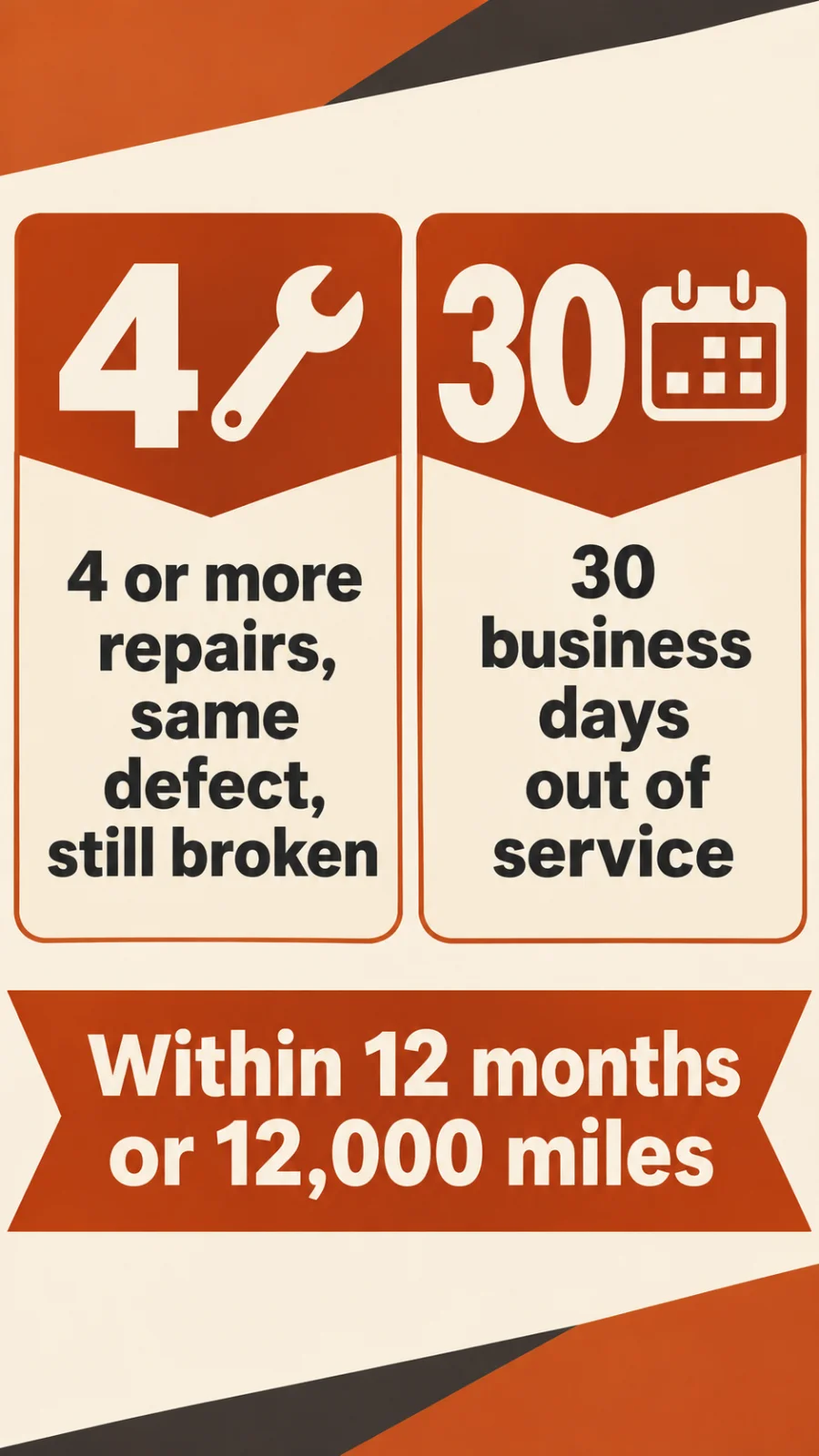
Illinois presumes a new vehicle is a lemon when the same defect has been repaired four or more times and still exists, or when the vehicle has spent 30 or more business days out of service for repairs. Both counts must happen within the first 12 months or 12,000 miles after delivery, whichever comes first. The rule is in the New Vehicle Buyer Protection Act, 815 ILCS 380/3, and the remedy is a replacement vehicle or a refund from the manufacturer.
Two details decide many claims: the manufacturer must receive written notice from you before the presumption applies, and a lawsuit must be filed within 18 months of delivery.
What Counts as a Lemon Under Illinois Law
Illinois does not use the word “lemon” in the statute. The Act, 815 ILCS 380/1 through 380/8, covers a new vehicle with a nonconformity, which is a failure to meet the manufacturer’s express warranty that substantially impairs the vehicle’s use, market value, or safety.
Which vehicles are covered
Under Section 2, a “new vehicle” includes passenger cars, vehicles in the Second Division (vans and light trucks) weighing under 8,000 pounds, and recreational vehicles. Camping and travel trailers that meet the definition of a used motor vehicle are excluded. Used cars, motorcycles, boats, and altered or modified vehicles are outside the Act, according to the Attorney General’s consumer guide.
Who counts as a consumer
A consumer is an individual who buys or leases a new vehicle for at least one year, mainly for personal, household, or family transportation. A fire department, fire protection district, or township fire department that buys or leases a new vehicle for a year or more also qualifies. A business buying a delivery van does not fit the definition.
What “substantially impairs” means in practice
The statute does not list qualifying defects. Brakes that fail, a transmission that slips out of gear, stalling at highway speed, and steering faults are safety or use problems that fit. A rattling trim panel usually does not. The question is whether a defect meaningfully affects how the vehicle can be used, what it is worth, or whether it is safe, and a court decides that on the facts.
How Many Repair Attempts Before a Refund?
Four, for the same defect, or 30 business days in the shop for any covered defects combined. Either one creates a legal presumption that the manufacturer had a reasonable number of chances to fix the vehicle.
| Trigger | What must be true | Window |
|---|---|---|
| Repeat repairs | Same nonconformity repaired 4 or more times by the manufacturer, its agents, or authorized dealers, and it still exists | First 12 months or 12,000 miles, whichever is first |
| Days out of service | Vehicle out of service for repair of nonconformities for 30 or more business days in total | First 12 months or 12,000 miles, whichever is first |
Business days exclude weekends, so 30 of them is about six weeks of calendar time. The days do not need to be consecutive, and they can come from different visits and different defects.
Can you qualify with fewer than four attempts?
Possibly. Section 3(a) sets the remedy for a failure to conform “after a reasonable number of attempts,” and the four-attempt rule is a presumption that makes that showing easier. Without the presumption you would have to prove to a court that fewer attempts were reasonable, which is harder for a minor problem and more realistic for a dangerous one such as a brake failure.
What counts as one attempt
The Act does not define a repair attempt. The repair order is your evidence, so make sure each one lists your complaint in your own words, the dates the vehicle was dropped off and picked up, and the work performed. A dealer who writes “could not duplicate” on the order still shows you reported the problem.
The Written Notice Requirement in Section 3(h)
The presumption does not apply against the manufacturer unless the manufacturer received prior direct written notice from you or on your behalf and had an opportunity to correct the defect. Telling the dealer is not the same as telling the manufacturer. Many summaries of the Illinois rule list the four attempts and stop there, which leaves out the step that makes the count usable.
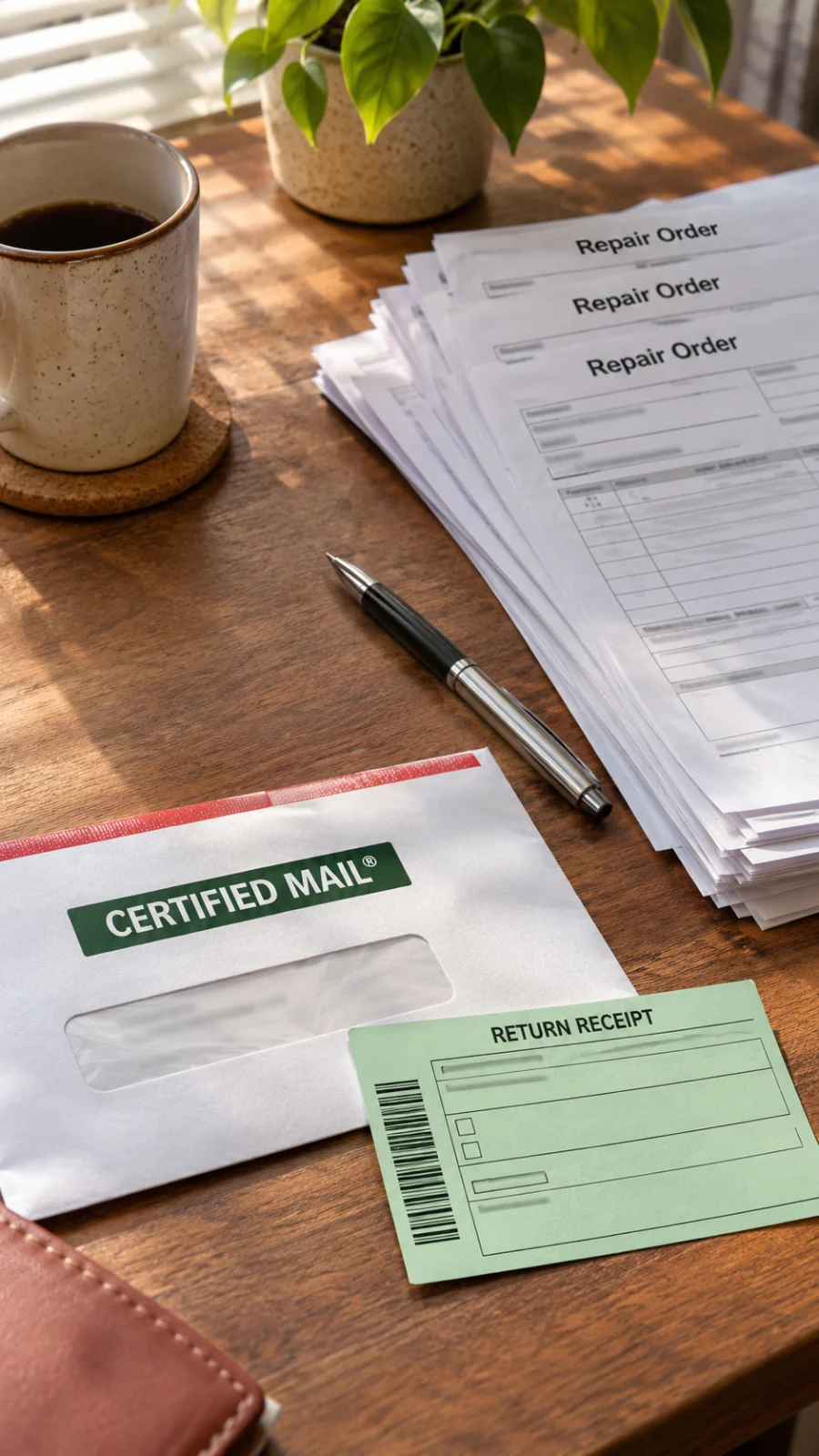
Send the letter by certified mail, return receipt requested, to the address in your owner’s manual or warranty booklet for customer assistance. Say that you are giving notice under the New Vehicle Buyer Protection Act, describe the defect, list the repair dates, and say the vehicle is available for a final repair attempt. Keep the receipt.
Manufacturer Dispute Programs Come Before a Lawsuit
If the manufacturer runs a qualifying informal dispute program, Section 4 requires you to try it before seeking the Section 3(a) remedy. The requirement applies only when the program substantially follows the federal rules in 16 C.F.R. Part 703 and you received written notice of it. Describing the program in the warranty terms counts as notice.
Under the federal rule, the program must be free to consumers and must decide a dispute within 40 days after it receives notice, with limited exceptions. Its decisions do not legally bind you. If you are unhappy with the result, you can sue, and the decision can be introduced as evidence.
The Attorney General’s guide says a claim cannot be started through the dealer. Contact the manufacturer’s designated representative for your vehicle, who sends the forms. Your owner’s manual or warranty booklet describes the program.
What You Get Back: Replacement or Refund
Section 3(a) requires the manufacturer to either replace the vehicle with a comparable one or take it back and refund the purchase price or lease cost. The refund includes collateral charges but not the sales tax paid on the initial purchase, and it is reduced by a reasonable allowance for your use.
Under Section 3(c), that allowance covers only wear from use before you first reported the defect and during periods when the vehicle was not in the shop. The Act gives no mileage formula, so the dollar figure is negotiated or decided by a court. A 2004 bill (SB 3149) would have added a formula, and it never became law.
- Lienholders: Under Section 3(f), the refund is split between you and the lender according to your interests.
- Abuse defense: Under Section 3(d), the manufacturer can defend by showing the defect came from abuse, neglect, or unauthorized modification.
- Natural disasters and strikes: Section 3(e) pauses the warranty period when repair service is unavailable because of war, strike, fire, flood, or similar events.
- Delivery paperwork: Section 7 requires the seller to give you a written, conspicuous statement of these rights when the vehicle is delivered.
Bought-back vehicles cannot be quietly resold
A manufacturer that repurchases or replaces a vehicle under the Act may not resell it unless it corrects the nonconformity and gives the next buyer a written disclosure, under 625 ILCS 5/5-104.2 of the Illinois Vehicle Code. This is the reason a buyback may carry a disclosure statement when it reaches a used lot.
Section 5 is an election-of-remedies rule: pursuing a remedy under the Act closes off a separate Uniform Commercial Code claim, so choose the route with a lawyer.
Deadlines: 12 Months to Qualify, 18 Months to Sue
Illinois uses two clocks. The 12 months or 12,000 miles is the window in which the repairs must happen. The deadline to file suit is separate: Section 6 requires an action within 18 months after original delivery.
The Attorney General’s consumer brochure stresses the 12-month period, which is how owners end up thinking their time ran out sooner than it did. The statute’s filing deadline is 18 months, and Section 4 extends it by the number of days your dispute spent in a manufacturer program.
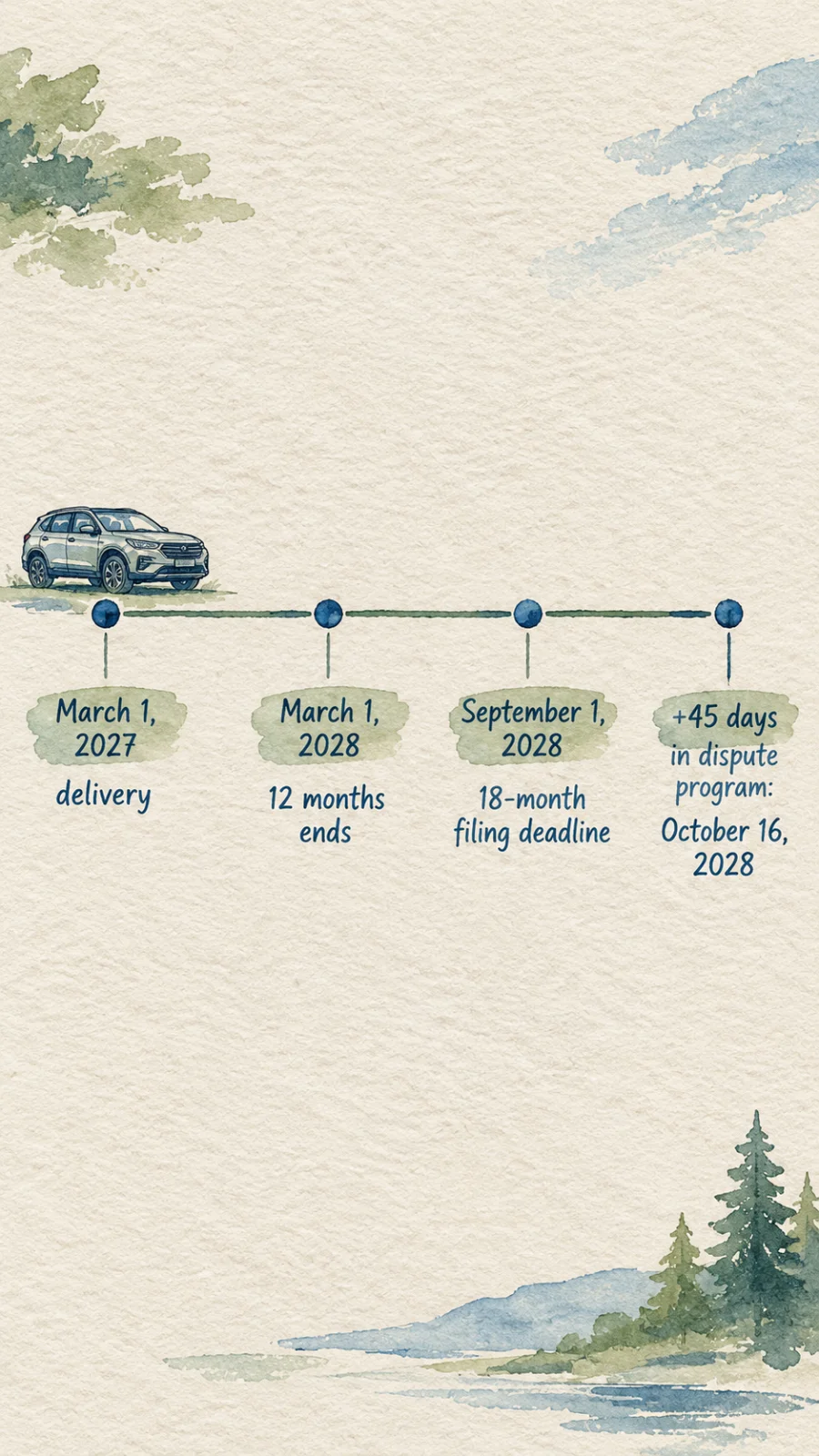
Take a hypothetical delivery date of March 1, 2027:
- The 12-month period ends March 1, 2028, or earlier if the odometer reaches 12,000 miles.
- The 18-month filing deadline is September 1, 2028.
- If the dispute program held the case for 45 days, the deadline moves to October 16, 2028.
If Your Car Does Not Qualify
A used car, a vehicle past 12 months or 12,000 miles, or a business-owned vehicle falls outside the Illinois Act, but warranty law may still help. The federal Magnuson-Moss Warranty Act, 15 U.S.C. § 2310, lets a consumer sue over a written warranty and recover attorney fees if they win, after giving the warrantor a reasonable opportunity to cure.
That fee rule matters because the Illinois Act’s text has no attorney-fee provision. A 2004 bill proposed one and did not pass.
The Illinois Supreme Court addressed a used car with remaining warranty coverage in Mydlach v. DaimlerChrysler Corp. (2007). The court held that a written repair-warranty claim accrues when a covered defect appears and the manufacturer fails or refuses to repair it, and borrowed the four-year Uniform Commercial Code limitations period. It also held that revocation of acceptance cannot be pursued against a manufacturer that did not sell the car.
Is the Illinois law changing?
Section 3 was last amended in 1996 (P.A. 89-626) and Section 2 in 2009 (P.A. 95-802, effective January 1, 2009). Bills that would replace the Act with a stronger version, including SB 76 (2017), SB 1760 (2019), and HB 4108 (2021), each ended without becoming law.
Steps to Take After the Second Repair Visit
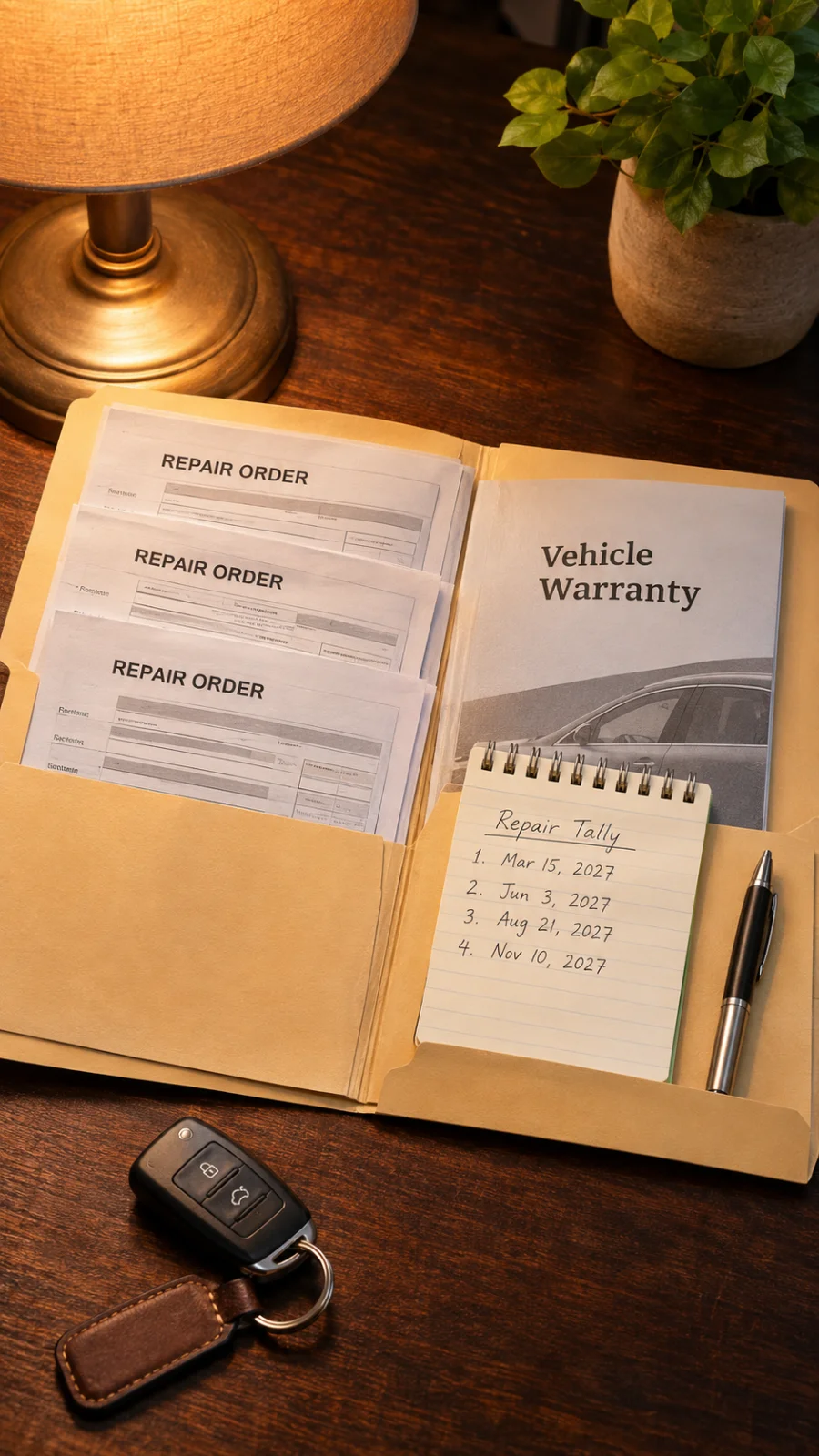
- Keep every repair order, receipt, and invoice, with the date in and date out for each visit.
- Count business days out of service as you go, and note the odometer reading at each visit.
- Read the warranty booklet for the manufacturer’s dispute program and the customer assistance address.
- Send the written notice from Section 3(h) by certified mail and offer a final repair attempt.
- Contact the manufacturer’s designated representative for the dispute program forms.
- File an Attorney General complaint or call a lemon law attorney well before the 18-month deadline.
The Attorney General’s Consumer Protection Division takes complaints at (800) 386-5438 in Chicago, (800) 243-0618 in Springfield, and (800) 243-0607 in Carbondale. Its auto buying and repairs page links the complaint form and the lemon law guide.
Frequently Asked Questions
Does the Illinois lemon law cover used cars?
No. The New Vehicle Buyer Protection Act covers new vehicles only. A used car still under a written warranty may be covered by the federal Magnuson-Moss Warranty Act.
How long do I have to file an Illinois lemon law claim?
An action must be filed within 18 months after the original delivery date under 815 ILCS 380/6. Time spent in a manufacturer’s dispute program extends the deadline by the same number of days.
Does the lemon law cover leased vehicles?
Yes, if you lease the vehicle for at least one year mainly for personal, household, or family transportation. The refund is based on the lease cost, which includes amounts such as deposits, fees, taxes, and payments.
Can I get a refund after only three repair attempts?
It is possible but harder. Three attempts do not trigger the statutory presumption, so you would need to show a court that three attempts were a reasonable number for a serious defect.
Can the dealer file my lemon law claim for me?
No. The Attorney General’s guide says claims cannot be started through the dealer. Contact the manufacturer’s designated representative for your vehicle instead.
Do I need a lawyer to use the Illinois lemon law?
The Act does not require one, but the Attorney General’s guide urges consulting a private attorney. The Act has no attorney-fee provision, so ask any lawyer how fees would be handled before you sign.
References
- Illinois General Assembly, 815 ILCS 380/2, New Vehicle Buyer Protection Act definitions
- Illinois General Assembly, 815 ILCS 380/3, failure of vehicle to conform, remedies and presumptions
- Illinois General Assembly, 815 ILCS 380/4, informal dispute settlement
- Illinois General Assembly, 815 ILCS 380/5, election of remedies
- Illinois General Assembly, 815 ILCS 380/6, 18-month filing deadline
- Illinois General Assembly, 815 ILCS 380/7, written disclosure of rights at delivery
- Illinois General Assembly, 625 ILCS 5/5-104.2, resale of nonconforming vehicles
- Illinois Supreme Court, Mydlach v. DaimlerChrysler Corp., No. 102588 (Sept. 20, 2007)
- Electronic Code of Federal Regulations, 16 C.F.R. Part 703, informal dispute settlement mechanisms
- Illinois Attorney General, Things You Should Know About the Illinois Lemon Law
- Illinois Attorney General, Auto Buying, Financing, and Repairs
- U.S. Code, 15 U.S.C. § 2310, Magnuson-Moss Warranty Act remedies