
New Jersey Lemon Law 2027: Coverage, Arbitration and Refunds
New Jersey’s New Car Lemon Law gives you a refund or a replacement when a new car or motorcycle has a defect the manufacturer cannot fix within the first 24,000 miles or two years after delivery, whichever comes first. You send the manufacturer a certified “last chance” letter, and if the defect survives that final repair, you apply to the Division of Consumer Affairs for a hearing with a $50 filing fee that you get back if you win.
The statute is N.J.S.A. 56:12-29 through 56:12-49. The state’s process is a summary hearing before an administrative law judge, not a private arbitration run by the carmaker, and that difference shapes almost every step below.
Which Vehicles Does the New Jersey Lemon Law Cover?
The law covers new passenger cars and motorcycles that are bought or leased in New Jersey or registered with the Motor Vehicle Commission. The Division of Consumer Affairs also lists authorized emergency vehicles (added January 19, 2010), farm tractors (added January 19, 2016) and the non-living portions of motor homes on its New Car Lemon Law page.
The defect has to be a “nonconformity,” which the statute defines as a defect or condition that substantially impairs the vehicle’s use, value or safety. A defect likely to cause death or serious bodily injury gets faster treatment, covered further down.
What Is Not Covered
The Division’s New Car Lemon Law consumer brief excludes commercial-use vehicles, the living quarters of motor homes, and damage from accident, vandalism, abuse or neglect. It also excludes problems caused by anyone other than the manufacturer, its agent or an authorized dealer. Under N.J.S.A. 56:12-40, a manufacturer can defend a claim by proving the defect does not substantially impair the vehicle, or that abuse, neglect or unauthorized modification caused it.
Leased vehicles are covered. A lessee has the same remedies as a buyer, and the lease ends with no early-termination penalty.
When Does a Defect Count as a Lemon?
A defect is presumed unfixable when it appears inside the protection window and meets one of three triggers. The window is the first 24,000 miles or two years after original delivery, whichever ends first, and the triggers are in N.J.S.A. 56:12-33.
| Trigger | What must happen | Notes |
|---|---|---|
| Repeat repairs | The same defect was repaired three or more times and still exists | Counts the final repair after your notice letter |
| Days out of service | 20 or more cumulative calendar days in the shop | 45 days for a motor home |
| Serious safety defect | A defect likely to cause death or serious bodily injury was examined or repaired once and persists | One attempt is enough |
The presumption applies against the manufacturer only if you sent the written notice described in the next section. A presumption is not a guarantee, and you can still win a case without hitting one of the triggers if you prove the defect substantially impairs the vehicle and was not fixed in a reasonable time.
The 24,000-mile figure came from a 2009 amendment (P.L. 2009, c.324), which raised the old 18,000-mile limit and added the one-repair rule for safety defects. Many older web pages still show 18,000 miles.
What Is the “Last Chance” Letter and Who Gets It?
You must send the manufacturer, not the dealer, a written notice by certified mail, return receipt requested, before you can use the presumption or file with the Lemon Law Unit. The manufacturer then has 10 calendar days from receipt to make one more repair attempt.
You can send the letter after two failed repairs, after 20 days out of service, or after one failed examination of a safety defect. The Division’s brief says the manufacturer must receive it before 24,000 miles and within two years of delivery, so do not wait until the last week. Ask the Lemon Law Unit for the address of the manufacturer’s regional office.
Keep the green return card. The brief lists it as required proof at the hearing, along with the three repair attempts and evidence that the defect remains after the last one. The Division’s published rules, N.J.A.C. 13:45A-26.5, also let you go to Superior Court instead of the Division after the 10 days pass.
Notice mistakes can end a claim. Administrative decisions annotated under the rule include one dismissed with prejudice where the letter went out while the car was in the shop and contained inaccurate information.

How Does the Lemon Law Hearing Work, and Is It Really Arbitration?
New Jersey’s state process is a summary administrative hearing, not arbitration in the usual sense. The Lemon Law Unit reviews your application, schedules a hearing with the Office of Administrative Law (OAL), and an administrative law judge decides the case. Hearings are held in Newark, Trenton or Atlantic City, and you can choose from the available dates.
Step by Step, With Deadlines
- Request a Lemon Law Dispute Resolution application from the Lemon Law Unit after the final repair fails.
- The Unit approves, rejects or returns the application for corrections.
- Once approved, you pay the $50 filing fee and the manufacturer receives a copy of your application.
- The hearing is usually held within 20 days of acceptance, depending on OAL’s calendar.
- The judge issues an Initial Decision within 20 days after the hearing.
- The Director of Consumer Affairs has 15 days to adopt, reject or modify it. Silence makes the decision final.
Include repair orders, photos and any other evidence with the application, because the judge uses them along with testimony. You can bring an attorney or an expert witness but you do not have to. The Division says the Unit does not represent you, and the manufacturer will have a lawyer.
Some carmakers also run their own informal dispute programs. Under N.J.S.A. 56:12-39 you are not required to use one before going to the Division or to court.
Court Instead of the Division
You can sue in Superior Court instead. If you prevail in either forum, N.J.S.A. 56:12-42 requires the manufacturer to pay your reasonable attorney’s fees, expert witness fees and costs, which is why many lemon law lawyers take these cases without charging the client up front.
The Lemon Law has no explicit statute of limitations. A federal court in New Jersey, ruling on a motor home claim in Civil No. 3:21-cv-20434, borrowed the time limit for a breach of warranty claim under the Uniform Commercial Code, which is generally four years for sales contracts. Court filings should still go in well before that, because the court treated the claim as accruing when the repair triggers were met.
What Do You Get Back? Refund and Replacement Rules
If the manufacturer cannot fix the defect, it must take the vehicle back and either refund your money or, if you agree, provide a replacement. The manufacturer picks which to offer, but under N.J.S.A. 56:12-32 you can reject a replacement and insist on the refund.
The refund covers the following, minus a deduction for your use of the vehicle:
- The purchase price, including any trade-in credit
- Options or modifications installed within 30 days of delivery
- Sales tax, license and registration fees
- Finance charges
- Towing and rental costs for the days the vehicle was out of service
The refund goes to you and your lienholder as shown in Motor Vehicle Commission records. The $50 filing fee is not part of the purchase price, but administrative decisions treat it as a recoverable cost.
How the Use Allowance Is Calculated
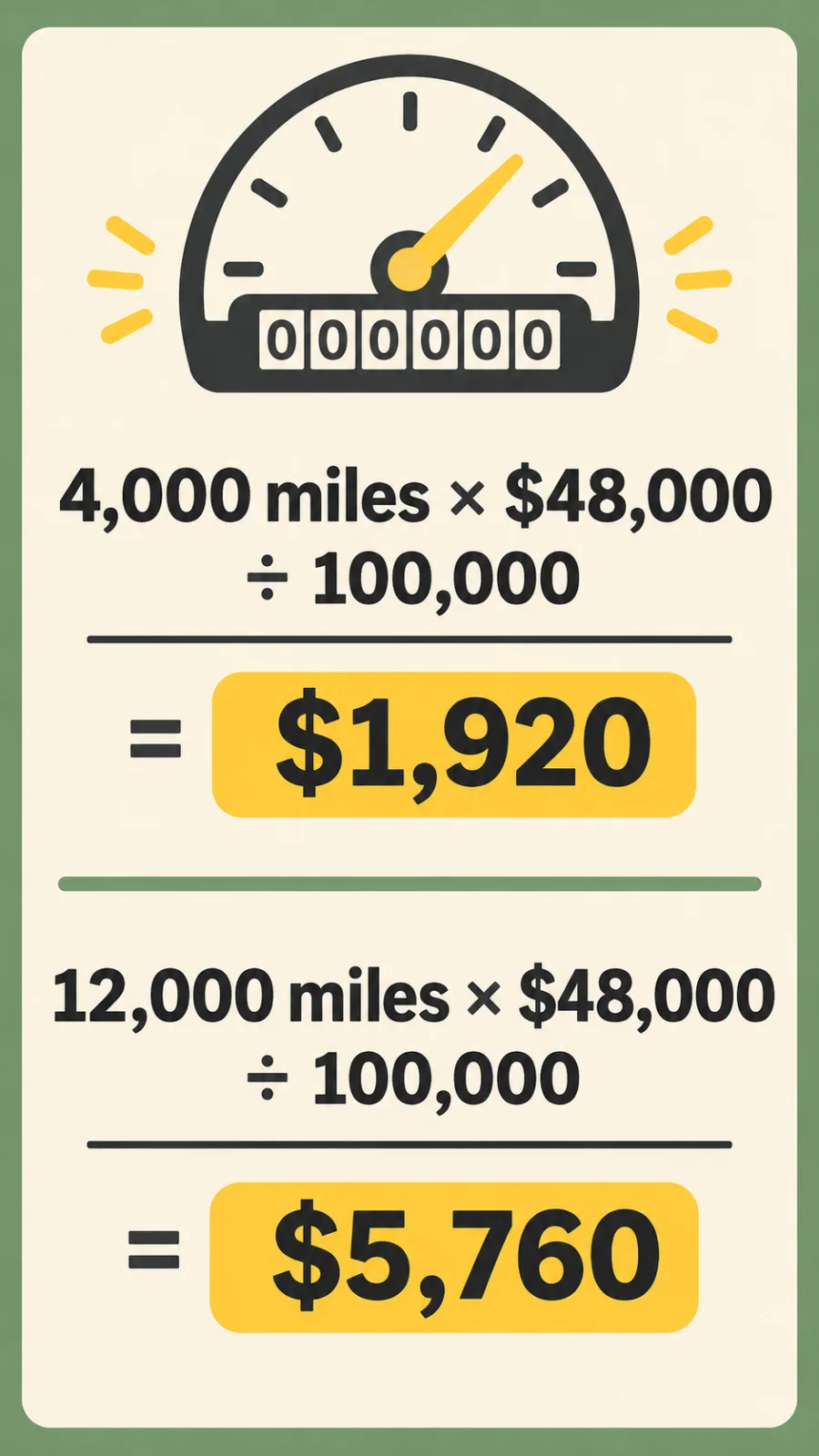
The deduction is the mileage when you first brought the vehicle in for the defect, multiplied by the purchase or lease price, divided by 100,000. Take a $48,000 car first brought in at 4,000 miles: 4,000 × $48,000 ÷ 100,000 = $1,920. Had the same car first gone to the dealer at 12,000 miles, the deduction would be $5,760.
Because the mileage counts from the first presentation for that defect, not from your last visit, dealer repair orders should show the odometer reading at your very first complaint. Report the problem on the first visit it appears, in writing if you can.
What If the Manufacturer Does Not Follow the Decision?
Tell the Lemon Law Unit right away. Noncompliance with a final decision can bring penalties of up to $5,000 per day under N.J.S.A. 56:12-37, and any party can appeal to the Appellate Division. A manufacturer that appeals must post a bond covering the award and the anticipated attorney’s fees, so an appeal does not simply delay payment at no cost.
Where a manufacturer resells a bought-back vehicle, the title must carry a lemon law branding notice, and dealers have to disclose the buyback to the next buyer under N.J.A.C. 13:45A-26.3 and 26.4.
Does New Jersey Have a Used Car Lemon Law?
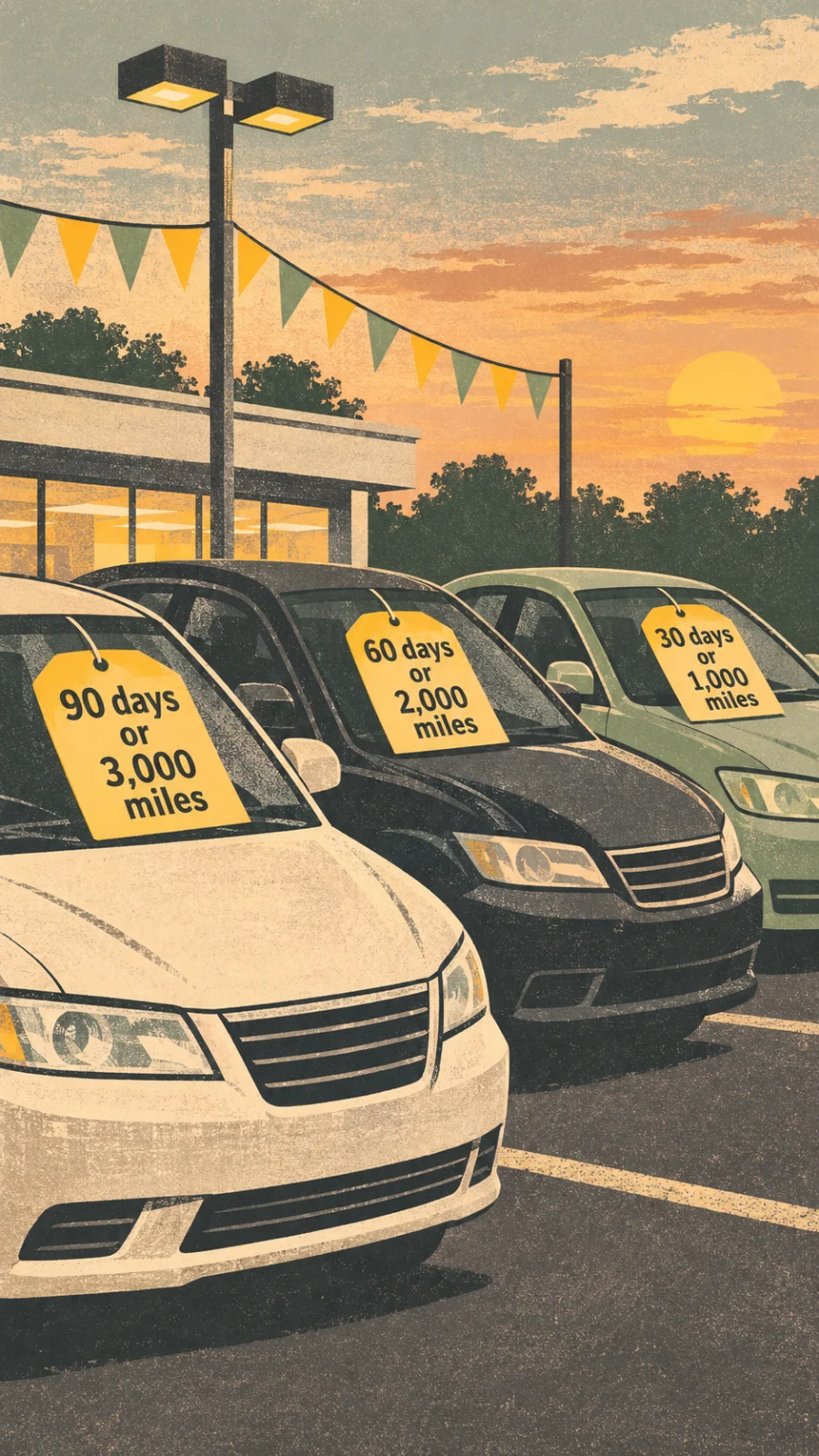
Yes, and it is a separate law with different rules: the Used Car Lemon Law, N.J.S.A. 56:8-67 and following, implemented by N.J.A.C. 13:45A-26F. It applies to vehicles bought from a New Jersey dealer that were sold for more than $3,000, are seven model years old or less, and had 100,000 miles or fewer at sale. The dealer, not the manufacturer, owes the warranty.
| Mileage at sale | Minimum dealer warranty | Deductible |
|---|---|---|
| 24,000 or fewer | 90 days or 3,000 miles | $50 per repair |
| 24,001 to 60,000 | 60 days or 2,000 miles | $50 per repair |
| 60,001 to 100,000 | 30 days or 1,000 miles | $50 per repair |
The warranty ends at whichever limit arrives first. Above 60,000 miles, a buyer can waive the warranty in writing, and a dealer that fails to give a written warranty is still deemed to have given one unless that waiver was signed.
If a covered defect cannot be fixed, the Lemon Law Unit can order a dealer buyback and refund. The refund is reduced by a deduction for personal use based on the IRS business mileage rate on the buyback date, plus any allowance for excessive wear and tear. A used car decision can be appealed to the Appellate Division within 45 days of the final decision.
The same Unit also handles motorized wheelchairs and scooters under a separate subchapter, N.J.A.C. 13:45A-26E, where a winning consumer can get a refund and an early end to any lease.
Where to File and Who to Call
Applications and questions go to the Office of Consumer Protection, Lemon Law Unit, P.O. Box 45026, Newark, NJ 07101. The Unit’s numbers are 973-504-6226 and 800-242-5846, and its page is at the Division of Consumer Affairs Lemon Law Unit. The Unit gives information but not legal advice.
Before you mail the last chance letter, gather this:
- Sales or lease contract showing the delivery date
- Every repair order, with dates in and out and the odometer reading
- A running count of days the vehicle was out of service
- Rental, towing and parking receipts
- The certified mail receipt and the green return card
Cases are sometimes settled with the manufacturer after the Unit accepts an application and before the hearing, so a complete file helps even if you never reach a judge.
Frequently Asked Questions
How many repair attempts does New Jersey require for a lemon?
Three attempts for the same defect, counting the final attempt after your certified letter, or 20 cumulative days out of service. A serious safety defect needs only one examination or repair.
Do I have to go through the manufacturer’s arbitration program first?
No. N.J.S.A. 56:12-39 lets you skip a manufacturer’s informal program and go to the Division of Consumer Affairs or Superior Court.
Does the Lemon Law cover a car I leased?
Yes. A lessee gets the same remedies as a buyer, and the lease ends without an early-termination penalty.
What does it cost to file a claim?
The Division charges a $50 filing fee once your application is accepted. It is recoverable as a cost if you win, and a winning consumer also gets reasonable attorney’s fees.
Does the Lemon Law cover a used car from a dealer?
The Used Car Lemon Law does, if the car sold for more than $3,000, is seven model years old or less, and had 100,000 miles or fewer. The dealer warranty runs 30 to 90 days depending on mileage.
Can I still file if the car passes 24,000 miles during the process?
Yes, if the defect appeared and you gave notice inside the window. The Division’s brief requires the manufacturer to receive your letter before 24,000 miles and within two years of delivery.
References
- New Jersey Statutes, N.J.S.A. 56:12-29 et seq., New Car Lemon Law findings and intent
- New Jersey Statutes, N.J.S.A. 56:12-42, attorney’s fees, expert fees and costs
- N.J. Division of Consumer Affairs, N.J.A.C. 13:45A-26, Automotive Dispute Resolution rules
- N.J. Division of Consumer Affairs, Consumer Brief: New Car Lemon Law, Your Road to Relief
- N.J. Division of Consumer Affairs Lemon Law Unit, New Car Lemon Law page
- N.J. Division of Consumer Affairs Lemon Law Unit, Used Car Lemon Law page, N.J.S.A. 56:8-67 et seq.
- New Jersey Administrative Code, N.J.A.C. 13:45A-26F.3, used car dealer warranty
- U.S. District Court, District of New Jersey, opinion in Civil No. 3:21-cv-20434, Lemon Law limitations period