
Is Abortion Legal in Maine? What You Need to Know

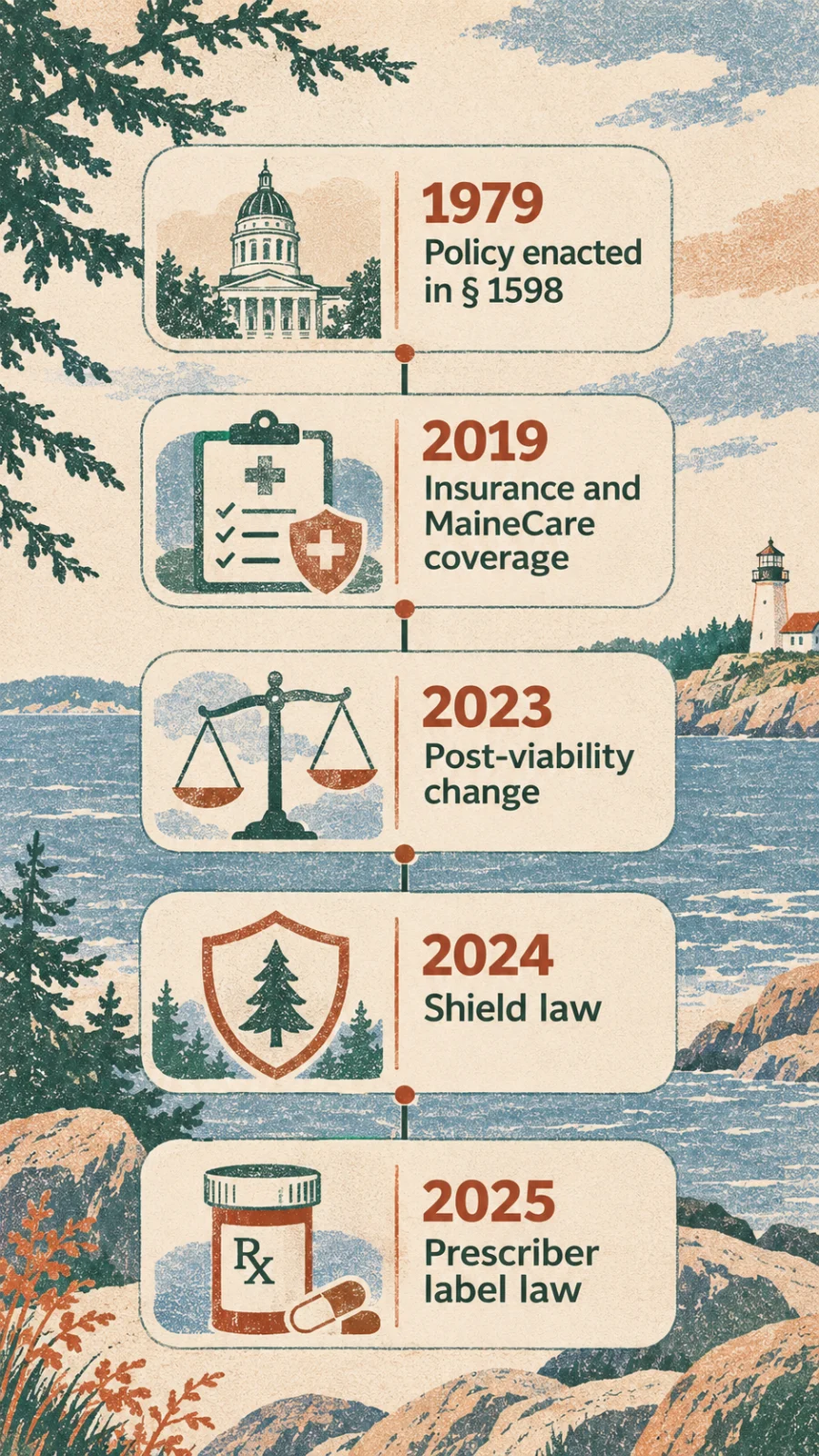
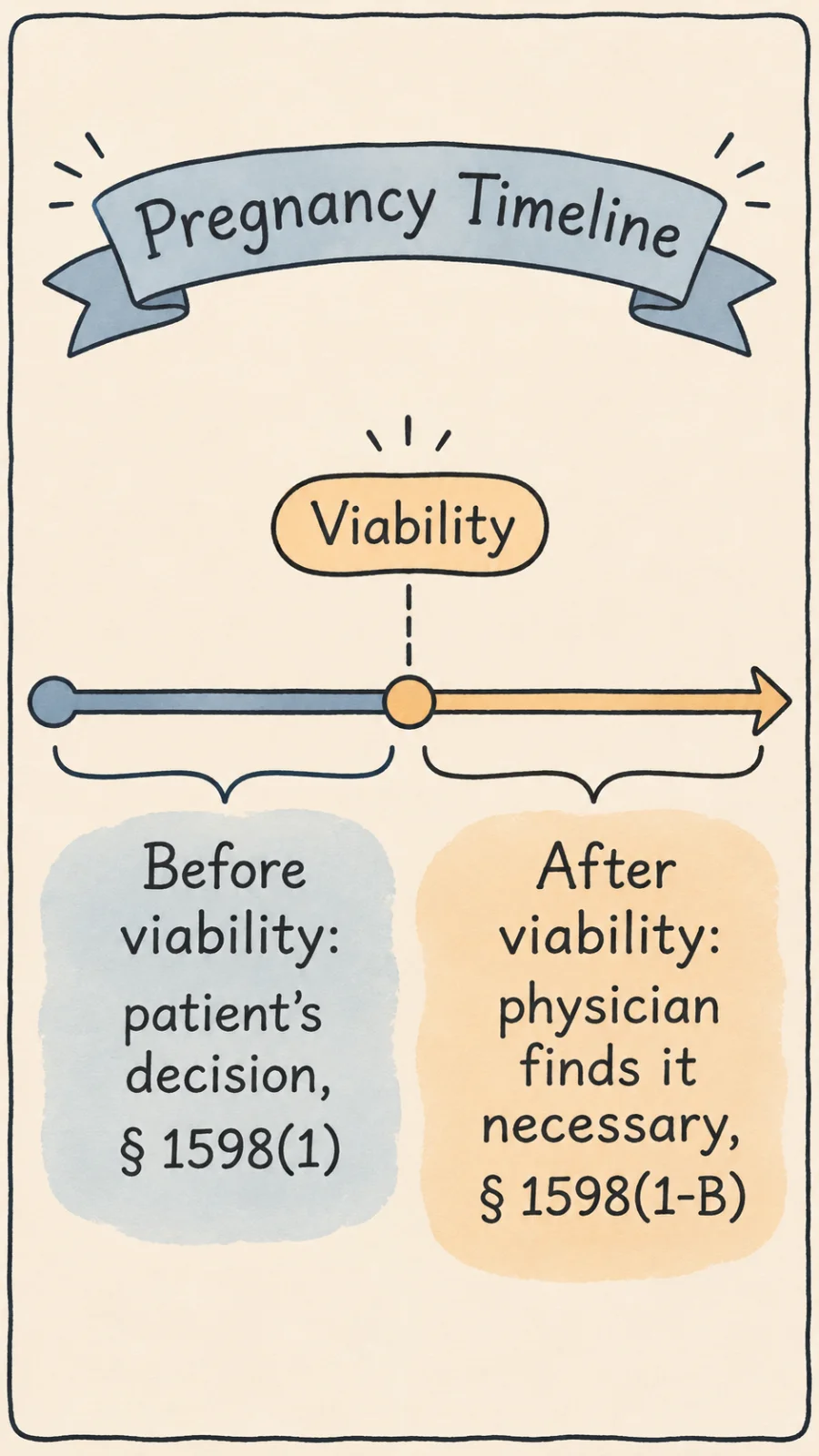
Yes, abortion is legal in Maine. The state’s public policy under 22 M.R.S. § 1598 is not to restrict a person’s decision to end a pregnancy before viability, and since 2023 an abortion after viability is allowed whenever a licensed physician judges it necessary.
Maine has no waiting period for adults, no ban on telehealth, and a state law that stops cities and counties from passing their own abortion rules. Patients under 18 have four ways to consent, and a parent’s signature is only one of them.
Maine Abortion Law at a Glance
The table below pulls the main rules into one place, with the statute behind each.
| Situation | Rule | Source |
|---|---|---|
| Adult, before viability | Legal. The State may not restrict the decision. | 22 M.R.S. § 1598(1) |
| After viability | Allowed when a licensed physician finds it necessary | 22 M.R.S. § 1598(1-B) |
| Who may perform | Physicians, physician associates, advanced practice registered nurses | 22 M.R.S. § 1598(3) |
| Patient under 18 | One of four consent paths, including a court order | 22 M.R.S. § 1597-A |
| Local bans or ordinances | Preempted by state law | 22 M.R.S. § 1598(1-A) |
| Private insurance | Plans that cover maternity care must cover abortion | 24-A M.R.S. § 4320-M |
What Does Maine Law Say About Abortion Before Viability?
Before viability, Maine treats abortion as a private medical decision and does not limit it by reason, trimester or week. Section 1598(1) states that policy, and it ties abortion care to licensed health care professionals.
The statute defines “abortion” as ending a pregnancy by external chemical or physical agents, or by ingesting chemicals, for any purpose other than producing a live birth or removing a dead fetus. That wording covers both procedural and medication abortion, so both follow the same rules. Medication abortion is the most common type in Maine, accounting for roughly 70% of abortions in 2023 according to state data reported by Maine Public.
No waiting period or mandatory counseling for adults
Maine’s abortion chapter, 22 M.R.S. chapter 263-B, does not impose a waiting period on adults. An older informed-consent section, § 1599, was repealed in 1993 (P.L. 1993, c. 61) and has no operative text.
Is Abortion Allowed After Viability in Maine?
Yes. After viability, an abortion may be performed when it is necessary in the professional judgment of a licensed physician. That standard comes from P.L. 2023, c. 416 (L.D. 1619), which Gov. Janet Mills signed on July 19, 2023.
Before that law, § 1598 allowed a post-viability abortion only to preserve the patient’s life or health. The 2023 change replaced that language with the physician’s professional judgment, and the same law repealed the former criminal-liability subsection, § 1598(4).
How Maine defines viability
The statute defines viability as the stage of fetal development at which the fetus can survive indefinitely outside the womb with life-supportive systems. It sets no week count, so the determination rests with the physician.
Where people disagree
Supporters of the 2023 law say it leaves the decision to doctors and patients and fixes a rule that was too vague to use in a medical crisis. Opponents argue that “necessary in the professional judgment of a physician” has no defined limit. Testimony on L.D. 1619 reflected both views, and the Legislature passed the bill largely along party lines.
Who Can Perform an Abortion in Maine?
Under § 1598(3)(A), only a physician (an MD, DO or physician associate) or an advanced practice registered nurse may perform an abortion. A 2019 amendment (P.L. 2019, c. 262) brought advanced practice clinicians into the statute.
On January 1, 2027, the cross-references change so that physicians and physician associates are licensed under Title 32, chapter 153 (P.L. 2025, c. 738). The list of who may perform abortions stays the same. After viability, only a licensed physician may do so.
Section 1598(3) also keeps other law in force: it does not limit Title 32, § 3270 or any other civil or criminal law that applies to practicing without a license.
Abortion Rules for Patients Under 18
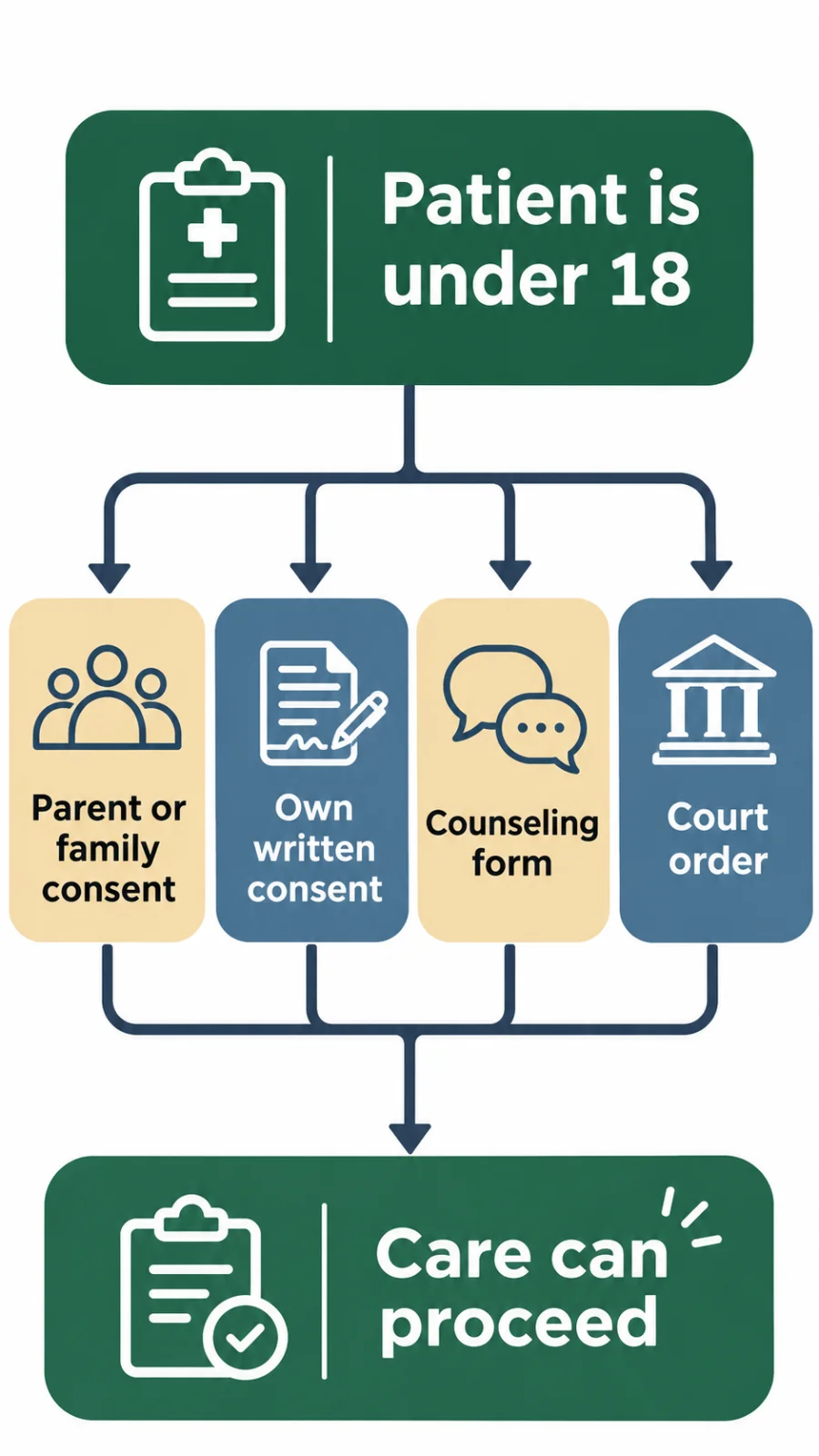
A minor in Maine can get an abortion with a parent’s consent, without it, or with a court order, depending on the path she uses. 22 M.R.S. § 1597-A lists four routes, and a health care professional may not knowingly perform the procedure on a minor unless one is met.
| Path | What is required | Parent involved? |
|---|---|---|
| Parent or family consent | Written consent from the minor and one parent, guardian or adult family member | Yes |
| Minor’s own consent | Written informed consent, and the professional finds her competent to give it | No |
| Counseling | Counseling from a listed counselor, a signed verification form, then written consent | No |
| Court order | Probate or District Court grants majority rights or consent | No |
Who counts as a counselor
The statute lists psychiatrists, licensed psychologists and social workers, ordained clergy, physician associates, nurse practitioners, certified guidance counselors, and registered or licensed practical nurses. Counseling must be objective and not coercive. It covers alternatives, birth control information and whether involving a parent is in the minor’s best interest. If the minor does not involve a parent, the counselor writes the reasons on the form.
How the court path works
The minor or a next friend files a petition in Probate Court or District Court, and the court must help prepare it. The petition and all records are confidential, and the hearing must be held within 5 days of filing. The court may deny the petition only if it finds the minor is not mature enough to decide and the abortion is not in her best interest. An appeal goes to Superior Court, with notice due within 24 hours of the order and the appeal perfected within 5 days.
Penalties under the minor-consent law
A person who knowingly performs or helps perform an abortion on a minor in violation of the section commits a Class D crime, which carries up to 364 days in jail and a fine of up to $2,000 under 17-A M.R.S. §§ 1604 and 1704. A health care professional or counselor who knowingly skips a required step faces a civil fine of up to $1,000 per violation. Nothing in the section allows an abortion against a minor’s will unless a court finds it necessary to save her life.
Can a Maine Town or County Ban Abortion?
No. Section 1598(1-A), added by P.L. 2023, c. 352 and approved June 28, 2023, says the State occupies the entire field of regulating pregnancy-termination decisions and abortion provision. Municipalities, counties and townships may not adopt any order, ordinance, rule or regulation on those subjects. Readers comparing nearby states may also find our guide to Alaska abortion laws useful.
Reporting Requirements and Patient Privacy
Providers must report every abortion to the Department of Health and Human Services, but the reports contain no patient names. Under 22 M.R.S. § 1596, each report includes the date and place, the patient’s age, the method and the gestational age, and is due within 10 days after the end of the month in which the abortion was performed.
The identities of patients and of the professionals who file reports are confidential, and the department must take steps to protect that confidentiality. A 2025 amendment repealed the separate miscarriage-reporting subsection, so providers no longer report miscarriages under this section. Courts and voters have shaped abortion access differently in each state, as our overview of Hawaii abortion laws shows.
Does Insurance Cover Abortion in Maine?
Yes, for most plans. 24-A M.R.S. § 4320-M requires a carrier offering a health plan that covers maternity services to also cover abortion services. P.L. 2023, c. 347, approved June 28, 2023, added a ban on cost sharing, so covered members should not owe a copay or deductible for the service. The law has narrow exemptions, including one that protects continued federal funding.
The state mandate reaches insured plans regulated in Maine. Self-funded employer plans governed by federal law generally fall outside state insurance mandates, so ask your plan administrator which type you have.
MaineCare
MaineCare covers abortion services under 22 M.R.S. § 3196, enacted by P.L. 2019, c. 274 (L.D. 820). Services that federal Medicaid rules do not cover are paid with state funds.
Maine’s Shield Law and Prescriber Label Law
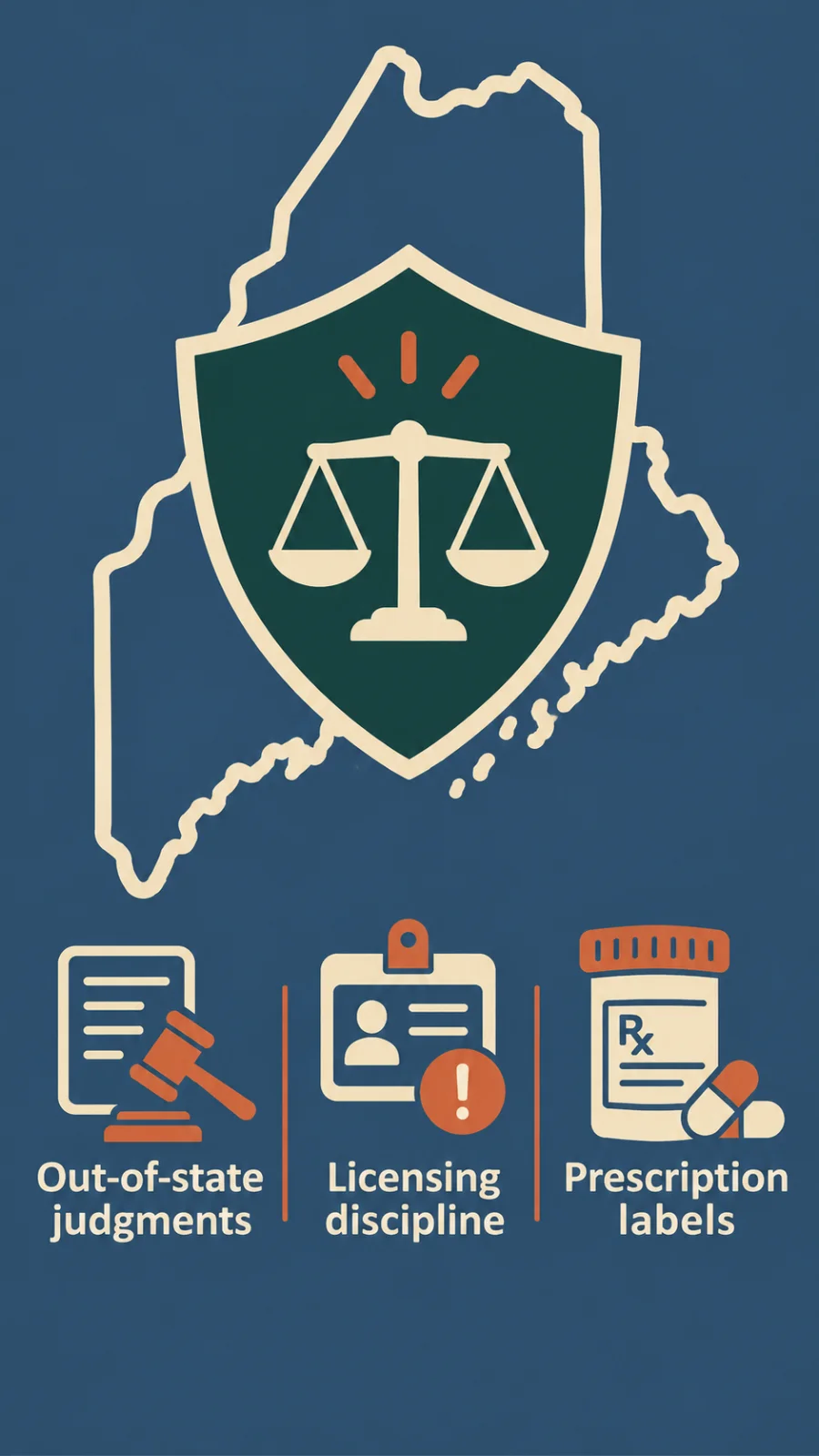
Maine protects providers of abortion care from out-of-state legal action under P.L. 2023, c. 648 (L.D. 227), signed April 22, 2024 and effective in August 2024. It created 14 M.R.S. chapter 763 on “legally protected health care activity,” which covers abortion and gender-affirming care. The Legislature’s enacted law summary describes the package, which spans several titles of the statutes.
- Courts may not give effect to an out-of-state judgment based on protected care when the issuing court lacked jurisdiction or due process (14 M.R.S. § 9004).
- Except where federal law requires it, arrests tied to protected care are limited (15 M.R.S. § 203).
- Licensing boards cannot discipline a practitioner for protected care provided in line with Maine law (for example, 10 M.R.S. § 8012).
- Maine’s malpractice insurance and health insurance statutes bar penalties against covered practitioners for protected care.
In 2025, Gov. Mills signed L.D. 538 on May 29. It lets a prescriber of mifepristone, misoprostol or their generics ask that the prescription label show the health care facility’s name instead of the prescriber’s. Sponsors said the bill answered harassment of providers whose personal information was posted online. Opponents, including some legislators, argued the change conflicts with federal labeling rules. The bill page tracks its text and votes.
Could Maine’s Abortion Law Change?
Yes, because the protections are statutes, and a future Legislature can amend them. An effort to put a constitutional right to “reproductive autonomy” before voters, L.D. 780, failed in April 2024. Maine requires two-thirds of both chambers to send an amendment to the ballot, and the House vote of 75-65 on April 9 fell short.
What to Do If You Need an Abortion in Maine
- Call a licensed provider. Planned Parenthood, Maine Family Planning and many hospital-based practices offer care, and most can tell you how far along you may be for medication abortion and what your options are.
- Ask about cost before the visit. Ask whether your plan is state-regulated (no cost sharing under § 4320-M) or self-funded, and contact MaineCare if you are a member.
- If you are under 18, pick a path from the table above. A counselor can complete the verification form, and the court path begins at your local Probate or District Court.
- If you are past viability, work with a physician. The decision turns on the doctor’s professional judgment under § 1598(1-B).
Frequently Asked Questions
Is abortion legal in Maine up to birth?
Not without a medical finding. Before viability the decision is the patient’s, and after viability a licensed physician must judge the abortion necessary under § 1598(1-B).
Does Maine have a waiting period?
No. Maine’s abortion chapter does not impose a waiting period on adults, and the old informed-consent section was repealed in 1993.
Can a minor get an abortion without a parent’s consent?
Yes. A minor can consent herself if the professional finds her competent, complete the counseling path, or obtain a court order under § 1597-A.
Can a nurse practitioner perform an abortion in Maine?
Yes. Advanced practice registered nurses may perform abortions under § 1598(3)(A), alongside physicians and physician associates.
Does MaineCare pay for abortion?
Yes. 22 M.R.S. § 3196 requires MaineCare to cover abortion services, with state funds paying for services federal Medicaid does not cover.
References
- Maine Legislature, 22 M.R.S. § 1598, Abortions
- Maine Legislature, 22 M.R.S. § 1597-A, Consent to a Minor’s Abortion
- Maine Legislature, 22 M.R.S. § 1596, Abortion Data and Reporting
- Maine Legislature, P.L. 2023, c. 416 (L.D. 1619), Abortion after viability
- Maine Legislature, 24-A M.R.S. § 4320-M, Coverage for Abortion Services
- Maine Legislature, P.L. 2019, c. 274 (L.D. 820), MaineCare and private insurance coverage
- Maine Legislature, Enacted Law Summary, P.L. 2023, c. 648 (L.D. 227), Legally Protected Health Care Activity
- Maine Legislature, L.D. 538 (132nd Legislature), Prescription drug labeling for mifepristone and misoprostol